flowchart TB

DP[Desigualdades \npersistentes]-->BV[Brechas de aprendizaje\n que relegan a \nvarones]

DP-->MM[Mejores logros \neducativos \nde mujeres]


BV--->SE{Sin embargo}
MM--->SE
SE--->ML[Brechas de género \nen el mundo del trabajo\n a favor de los varones\nno relacionadas \ncon productividad]
Resumen
La región del Caribe ha hecho avances considerables en términos de acceso a la educación, logrando una matrícula escolar primaria prácticamente universal y niveles similares de logros educativos en relación con países comparables. Sin embargo, persisten desigualdades de aprendizaje a lo largo de los ciclos de vida de los estudiantes a medida que avanzan de la educación primaria a la secundaria y terciaria. Además, existen crecientes brechas de género que dejan atrás a los hombres en términos de logros educativos. Es urgente comprender mejor los determinantes de esta realidad, ya que no abordarlos podría traducirse en desigualdades de largo plazo relacionadas con la productividad que podrían limitar el crecimiento óptimo.
Comentarios
Dadas las ideas de dureza masculina, los niños en la escuela suelen ser tratados con más dureza que las niñas y son más propensos a soportar la humillación pública (Figueroa, 2007; Bailey, 2014).
La metodología utilizada corresponde a la diseñada por Ñopo (2008), basada en la literatura sobre descomposición de brechas liderada por Blinder (1973) y Oaxaca (1973), quienes examinan las brechas salariales de género comparando retornos diferenciales a la educación para mujeres y varones.
Resumen visual del documento
Importante
Despite females better results in education, their outcomes in the labor market are less favorable than those of males. Women show lower participation, and among labor market participants, they have higher unemployment rates and lower wages than men. For The Bahamas and Guyana, we document that wage gaps are primarily driven by non-observable characteristics unrelated to labor productivity.
Cita textual de los determinantes de las brechas
Dentro del entorno escolar, la pedagogía se ha caracterizado como centrada en el docente, autoritaria, tradicional y abstracta. Un estudio encuentra que esto podría ser contraproducente para los niños, quienes parecen responder más a las clases interactivas y experienciales, incluidos los debates y las discusiones. Además, la profesión docente está predominantemente dominada por mujeres. En Jamaica, por ejemplo, alrededor del 80% de los docentes de primaria y secundaria son mujeres. Las observaciones cualitativas sugieren que los niños pueden estar menos entusiasmados con las materias académicas y participar menos en clase cuando les enseñan maestras , y esto puede estar correlacionado con un bajo rendimiento académico. Por otro lado, ese desequilibrio de género en la profesión docente parece haber afectado la visión que los profesores tienen de los estudiantes. Un estudio encontró que los maestros describían las actitudes de los niños dentro del aula como “perezosas”, “perturbadoras”, “ruidosas” y “mediocres”; pero utilizaron palabras como “atenta”, “aplicada”, “seria” y “alentadora” para describir a las niñas. En términos de los efectos de la escuela en las dimensiones no académicas, la evidencia reciente muestra que las escuelas secundarias preferidas en Barbados y Trinidad y Tobago redujeron significativamente la fertilidad adolescente, lo que, a largo plazo, favoreció mejores logros educativos y resiliencia del mercado laboral durante la crisis de COVID-19 entre mujeres.
Más allá del entorno escolar, las normas sociales caribeñas relativas a las conductas esperadas por género en el hogar podrían transferirse al entorno de aprendizaje. Mientras que la socialización de las niñas exige una supervisión más estrecha y les enseña obediencia, cooperación y otras habilidades que las ayudan a adaptarse a las rutinas escolares, se supone que los niños “van a jugar” y tienden a no ser monitoreados tan de cerca, lo que generalmente se asocia con niveles más bajos de responsabilidad. y autocontrol. Además, las nociones de masculinidad están fuertemente relacionadas con la capacidad de mantenerse a sí mismo y a su familia. Por lo tanto, el ingreso temprano al mercado laboral es un determinante importante del abandono escolar entre los hombres. Esto se ve reforzado por la dinámica del mercado laboral caribeño, donde las tasas de empleo masculino son más altas con respecto a las femeninas, independientemente de su nivel educativo. De hecho, parece que cuando los hogares caribeños tienen dificultades financieras, los niños a menudo son retirados de la escuela para reforzar los ingresos familiares, mientras que las niñas son mantenidas en la escuela para retrasar el embarazo precoz. De acuerdo con esta noción, la Encuesta de Condiciones de Vida de 2014 de Trinidad y Tobago muestra que si los padres tuvieran que decidir quién de sus hijos sería enviado a la escuela si enfrentaran limitaciones financieras, la proporción que enviaría a una niña (35%) es significativamente mayor que aquellos que enviarían a un niño (22%).
Resumen automático
El documento ‘GG.pdf’ contiene 15813 palabras y se centra principalmente en education, gender, caribbean, male, female, gaps, labor, survey, trinidad, jamaica. El texto exhibe un tono predominantemente positivo. Los temas que surgen del análisis incluyen gender gaps, english speaking, speaking caribbean, caribbean education, education skills. Las palabras que más contribuyen al sentimiento positivo son work, support, favor, well, available, mientras que las que más contribuyen al sentimiento negativo son unemployed, harsh, waste, crime, discrimination.
El documento 'GG.pdf' contiene 15813 palabras y se centra principalmente en education, gender, caribbean, male, female, gaps, labor, survey, trinidad, jamaica. El texto exhibe un tono predominantemente positive. Los temas clave que surgen del análisis incluyen gender gaps, english speaking, speaking caribbean, caribbean education, education skills. Las palabras que más contribuyen al sentimiento positivo son work, support, favor, well, available, mientras que las que más contribuyen al sentimiento negativo son unemployed, harsh, waste, crime, discrimination. Las principales oraciones del documento son: BARBADOS (2016), GUYANA (2019),
JAMAICA (2016) AND TRINIDAD AND TOBAGO (2015)
TYPE OF WORKER BY GENDER & COUNTRY - THE BAHAMAS
Accommodation and food service Female 10% 20% 8% 41% 20%
activities
Male 7% 20% 7% 64% 2%
Activities of extraterritorial Female 50% 50%
organizations and bodies
Male 50% 50%
Activities of households as employers; Female 7% 13% 7% 53% 20%
undifferentiated goods- and
services-producing activities of
households for own use Male 40% 40% 20%
Administrative and support service
activities Male 50% 50%
Arts, entertainment and recreation Female 50% 50%
Construction Female 5% 8% 22% 54% 11%
Male 10% 17% 5% 5% 62% 2%
Education Female 3% 30% 23% 7% 17% 20%
Male 8% 16% 10% 65%
Financial and insurance activities Female 43% 14% 29% 14%
Male 17% 83%
Human health and social work Female 17% 6% 3% 49% 26%
activities
Male 16% 5% 5% 74%
Information and communication Female 13% 13% 25% 50%
Male 50% 50%
Manufacturing Female 100%
Male 4% 4% 17% 4% 4% 50% 8% 8%
Mining and quarrying Female 50% 50%
Male 33% 50% 17%
Other service activities Female 50% 50%
Male 30% 10% 10% 40% 10%
Real estate activities Male 100%
Transportation and storage Female 60% 20% 20%
Male 100%
Water supply; sewerage, waste
Male 8% 6% 6% 69% 6%
management and remediation activities
Wholesale and retail trade; repair of Female 83% 17%
motor vehicles and motorcycles
Male 27% 9% 9% 55%
0% 10% 20% 30% 40% 50% 60% 70% 80% 90% 100%
Elementary Occupations Skilled Agricultural, Forestry and Fishery Workers Technicians and Associate Professionals
Plant and Machine Operators and Assemblers Services and Sales Workers Professionals
Craft and Related Trades Workers Clerical Support Workers Managers
83
GENDER GAPS IN THE
ENGLISH-SPEAKING CARIBBEAN:
EDUCATION, SKILLS, AND WAGES
TYPE OF WORKER BY GENDER & COUNTRY - BARBADOS
Accommodation and food service Female 9% 4% 4% 67% 15%
activities
Male 9% 3% 5% 4% 41% 8% 5% 24%
Activities of extraterritorial Female 29% 57% 14%
organizations and bodies
Male 50% 50%
Activities of households as employers; Female 5% 62% 29%
undifferentiated goods- and services-
producing activities of households for own use Male 8% 15% 4% 27% 4% 42%
Administrative and support service Female 50% 50%
activities
Male 33% 33% 33%
Agriculture, forestry and fishing Female 8% 46% 46%
Male 3% 3% 59% 3% 3% 31%
Arts, entertainment and recreation Female 25% 50% 25%
Male 33% 33% 33%
Construction Female 12% 7% 12% 20% 30% 3% 16%
Male 11% 9% 3% 11% 15% 26% 24%
Education Female 6% 8% 13% 30% 25% 3% 12%
Male 6% 4% 16% 6% 40% 14% 5% 9%
Financial and insurance activities Female 8% 38% 19% 28% 6%
Male 12% 35% 35% 4% 4% 4% 4% 4%
Human health and social work Female 54% 8% 13% 13% 10%
activities
Male 67% 3% 6% 3% 22%
Information and communication Female 35% 16% 10% 29% 10%
Male 56% 17% 17% 11%
Manufacturing Female 10% 7% 22% 20% 5% 17% 20%
Male 8% 6% 11% 4% 36% 15% 19%
Mining and quarrying Female 5% 5% 11% 16% 5% 50% 3% 5%
Male 10% 8% 18% 3% 18% 13% 33%
Other service activities Female 13% 30% 20% 20% 7% 10%
Male 21% 28% 24% 3% 3% 7% 14%
Professional, scientific and technical Female 100%
activities
Male 100%
Real estate activities Female 50% 50%
Male 17% 33% 17% 17% 17%
Transportation and storage Female 12% 12% 29% 29% 12% 6%
Male 18% 18% 47% 6% 6% 6%
Water supply; sewerage, waste Female 17% 8% 25% 42% 8%
management and remediation
activities Male 6% 4% 67% 9% 14%
Wholesale and retail trade; repair of Female 7% 13% 27% 13% 7% 13% 20%
motor vehicles and motorcycles
Male 10% 3% 13% 3% 17% 13% 7% 33%
0% 10% 20% 30% 40% 50% 60% 70% 80% 90% 100%
Elementary Occupations Skilled Agricultural, Forestry and Fishery Workers Technicians and Associate Professionals
Plant and Machine Operators and Assemblers Services and Sales Workers Professionals
Craft and Related Trades Workers Clerical Support Workers Managers
84
GENDER GAPS IN THE
ENGLISH-SPEAKING CARIBBEAN:
EDUCATION, SKILLS, AND WAGES
TYPE OF WORKER BY GENDER & COUNTRY - GUYANA
Accommodation and food service Female 3% 6% 64% 4% 21%
activities
Male 12% 5% 58% 5% 16%
Activities of extraterritorial Female 20% 20% 20% 40%
organizations and bodies
Male 40% 40% 20%
Activities of households as employers; Female 37% 63%
undifferentiated goods- and services- producing
activities of households for own use Male 14% 14% 71%
Administrative and support service Female 8% 74% 9%
activities
Male 4% 4% 74% 3% 11%
Agriculture, forestry and fishing Female 5% 5% 4% 66% 16%
Male 55% 5% 33%
Arts, entertainment and recreation Female 33% 33% 33%
Male 50% 17% 33%
Construction Female 17% 8% 33% 17% 25%
Male 5% 4% 56% 4% 27%
Education Female 8% 59% 3% 3% 17% 10%
Male 8% 58% 4% 21% 4% 4%
Financial and insurance activities Female 12% 6% 24% 24% 18% 18%
Male 6% 6% 41% 29% 6% 6% 6%
Human health and social work activities Female 4% 41% 10% 11% 22% 13%
Male 4% 20% 14% 5% 32% 7% 16%
Information and communication Female 20% 20% 40% 20%
Male 14% 29% 14% 14% 14% 14%
Manufacturing Female 5% 4% 5% 22% 23% 23% 15%
Male 6% 5% 9% 21% 26% 9% 21%
Mining and quarrying Female 8% 8% 8% 77%
Male 19% 4% 5% 6% 5% 19% 42%
Other service activities Female 4% 4% 59% 26% 6%
Male 3% 18% 6% 3% 32% 32% 6%
Professional, scientific and technical Female 14% 7% 7% 43% 7% 7% 14%
activities
Male 4% 22% 26% 4% 15% 4% 4% 4% 19%
Transportation and storage Female 6% 3% 19% 29% 23% 16% 3%
Male 4% 5% 79% 5%
Water supply; sewerage, waste Female 5% 5% 11% 16% 47% 5% 11%
management and remediation activities
Male 9% 6% 26% 6% 17% 9% 28%
Wholesale and retail trade; repair of Female 6% 74% 3% 12%
motor vehicles and motorcycles
Male 7% 3% 48% 17% 5% 19%
0% 10% 20% 30% 40% 50% 60% 70% 80% 90% 100%
Elementary Occupations Skilled Agricultural, Forestry and Fishery Workers Technicians and Associate Professionals
Plant and Machine Operators and Assemblers Services and Sales Workers Professionals
Craft and Related Trades Workers Clerical Support Workers Managers
85
GENDER GAPS IN THE
ENGLISH-SPEAKING CARIBBEAN:
EDUCATION, SKILLS, AND WAGES
TYPE OF WORKER BY GENDER & COUNTRY - JAMAICA
Accommodation and food service Female 20% 6% 5% 54% 12%
activities
Male 17% 5% 21% 35% 4% 6% 11%
Activities of extraterritorial Female 22% 11% 22% 44%
organizations and bodies
Male 10% 30% 10% 30% 20%
Activities of households as employers; Female 25% 74%
undifferentiated goods- and services- producing
activities of households for own use Male 74% 3% 19%
Administrative and support service Female 10% 12% 18% 27% 18% 14%
activities
Male 11% 14% 19% 19% 4% 6% 13% 14%
Arts, entertainment and recreation Female 7% 10% 10% 16% 50% 3%
Male 15% 33% 30% 3% 9% 3% 4%
Construction Female 5% 5% 15% 10% 25% 40%
Male 4% 73% 21%
Education Female 3% 68% 4% 5% 10% 10%
Male 45% 11% 19% 7% 11%
Financial and insurance activities Female 17% 12% 21% 42% 5% 2%
Male 19% 11% 31% 25% 3% 3% 8%
Human health and social work Female 29% 17% 12% 30% 10%
activities
Male 48% 9% 30% 3% 5% 3%
Information and communication Female 13% 17% 17% 37% 3% 3% 10%
Male 11% 16% 3% 30% 3% 27% 5% 5%
Manufacturing Female 4% 5% 6% 7% 5% 44% 10% 15%
Male 4% 6% 4% 3% 6% 46% 17% 12%
Mining and quarrying Female 90% 9%
Male 92% 5%
Other service activities Female 3% 9% 5% 17% 57% 7%
Male 4% 9% 6% 7% 60% 4% 7%
Professional, scientific and technical Female 100%
activities
Real estate activities Female 11% 58% 16% 5% 11%
Male 7% 14% 50% 14% 11% 4%
Transportation and storage Female 29% 19% 48% 5%
Male 5% 89% 4%
Water supply; sewerage, waste Female 50% 17% 33%
management and remediation activities
Male 13% 19% 19% 6% 19% 19% 6%
Wholesale and retail trade; repair of Female 18% 3% 4% 55% 16%
motor vehicles and motorcycles
Male 10% 3% 25% 8% 29% 5% 17%
0% 10% 20% 30% 40% 50% 60% 70% 80% 90% 100%
Elementary Occupations Skilled Agricultural, Forestry and Fishery Workers Technicians and Associate Professionals
Plant and Machine Operators and Assemblers Services and Sales Workers Professionals
Craft and Related Trades Workers Clerical Support Workers Managers
86
GENDER GAPS IN THE
ENGLISH-SPEAKING CARIBBEAN:
EDUCATION, SKILLS, AND WAGES
TYPE OF WORKER BY GENDER & COUNTRY - TRINIDAD & TOBAGO
Accommodation and food service Female 23% 6% 15% 38% 15%
activities
Male 32% 6% 4% 18% 8% 8% 23%
Agriculture, forestry and fishing Female 6% 32% 55%
Male 7% 64% 24%
Construction Female 4% 4% 17% 7% 66%
Male 7% 53% 6% 28%
Financial and insurance activities Female 9% 8% 25% 27% 21% 10%
Male 12% 12% 23% 6% 29% 6% 4% 8%
Manufacturing Female 8% 3% 12% 12% 8% 17% 22% 18%
Male 9% 8% 4% 5% 34% 26% 13%
Mining and quarrying Female 10% 17% 24% 32% 3% 10%
Male 6% 9% 12% 5% 4% 23% 30% 11%
Other service activities Female 11% 6% 44% 17% 22%
Male 17% 17% 25% 17% 17% 8%
Professional, scientific and technical Female 4% 9% 24% 17% 18% 4% 24%
activities
Male 5% 8% 14% 6% 20% 15% 4% 28%
Transportation and storage Female 5% 5% 17% 38% 10% 15% 8%
Male 6% 7% 7% 3% 8% 63% 6%
Water supply; sewerage, waste Female 7% 19% 11% 43% 3% 3% 14%
management and remediation activities
Male 4% 8% 7% 3% 35% 28% 12%
0% 10% 20% 30% 40% 50% 60% 70% 80% 90% 100%
Elementary Occupations Skilled Agricultural, Forestry and Fishery Workers Technicians and Associate Professionals
Plant and Machine Operators and Assemblers Services and Sales Workers Professionals
Craft and Related Trades Workers Clerical Support Workers Managers
Source: own elaboration based on The Bahamas’ 2014 Household Survey, Barbados’ 2016 Continuous Labor Force Survey,
Guyana’s 2019 Labor Force Survey, Jamaica’s 2016 Labor Force Survey and Trinidad and Tobago’s 2015 Continuous Sample
Survey of Population. | THE BAHAMAS (2014), BARBADOS (2016),
GUYANA (2019), JAMAICA (2016) AND TRINIDAD AND TOBAGO (2015)
THE BAHAMAS, WAGES BY GENDER, INDUSTRY & AGE GROUP
Accommodation and food service 20 to 29
activities 30 to 44
45 to 60
60 or more
Activities of extraterritorial
organizations and bodies 30 to 44
Activities of households as employers; 20 to 29
undifferientiated goods and 30 to 44
services-producing activities of 45 to 60
housholds for own use
60 or more
Administrative and support service 30 to 44
activities 45 to 60
Administrative and support service 30 to 44
activities 45 to 60
Construction 20 to 29
30 to 44
45 to 60
60 or more
Education 20 to 29
30 to 44
45 to 60
60 or more
Financial and insurance activities 20 to 29
30 to 44
45 to 60
60 or more
Human health and social work 20 to 29
activities 30 to 44
45 to 60
60 or more
Information and communication 20 to 29
30 to 44
45 to 60
60 or more
Manufacturing 20 to 29
30 to 44
45 to 60
60 or more
Mining and quarrying 20 to 29
30 to 44
45 to 60
Other service activities 20 to 29
30 to 44
45 to 60
60 or more
Real estate activities 20 to 29
30 to 44
45 to 60
Transportation and storage 20 to 29
30 to 44
45 to 60
Water supply; sewerage, waste 30 to 44
management and remediation 45 to 60
activities 60 or more
Wholesale and retail trade; repair of 20 to 29
motor vehicles and motorcycles 30 to 44
45 to 60
60 or more
Male Female 0 1 2 3 4 5 6 7 8 9 10 11 12
Wage per hour/ $PPP USD
77
GENDER GAPS IN THE
ENGLISH-SPEAKING CARIBBEAN:
EDUCATION, SKILLS, AND WAGES
BARBADOS, WAGES BY GENDER, INDUSTRY & AGE GROUP
Accommodation and food service activities 20 to 29
30 to 44
45 to 60
60 or more
Activities of extraterritorial organizations and
bodies 45 to 60
Activities of households as employers; 20 to 29
undifferientiated goods and 30 to 44
services-producing activities of housholds 45 to 60
for own use
60 or more
Administrative and support service activities 30 to 44
45 to 60
Agriculture, forestry and fishing 30 to 44
45 to 60
60 or more
Arts, entertainment and recreation 30 to 44
Construction 20 to 29
30 to 44
45 to 60
60 or more
Education 20 to 29
30 to 44
45 to 60
60 or more
Financial and insurance activities 20 to 29
30 to 44
45 to 60
60 or more
Human health and social work activities 20 to 29
30 to 44
45 to 60
60 or more
Information and communication 20 to 29
30 to 44
45 to 60
60 or more
Manufacturing 20 to 29
30 to 44
45 to 60
60 or more
Mining and quarrying 20 to 29
30 to 44
45 to 60
60 or more
Other service activities 20 to 29
30 to 44
45 to 60
60 or more
Professional, scientific and technical activities 30 to 44
Real estate activities 45 to 60
Transportation and storage 20 to 29
30 to 44
45 to 60
Water supply; sewerage, waste management 20 to 29
and remediation activities 30 to 44
45 to 60
Wholesale and retail trade; repair of motor 30 to 44
vehicles and motorcycles 45 to 60
60 or more
Male Female 0 1 2 3 4 5 6 7 8 9 10 11 12 13
Wage per hour/ $PPP USD
78
GENDER GAPS IN THE
ENGLISH-SPEAKING CARIBBEAN:
EDUCATION, SKILLS, AND WAGES
GUYANA, WAGES BY GENDER, INDUSTRY & AGE GROUP
Accommodation and food service activities 20 to 29
30 to 44
45 to 60
60 or more
Activities of extraterritorial organizations and 30 to 44
bodies 45 to 60
Activities of households as employers;
undifferientiated goods and services-producing 45 to 60
activities of housholds for own use
Administrative and support service activities 20 to 29
30 to 44
45 to 60
60 or more
Agriculture, forestry and fishing 20 to 29
30 to 44
45 to 60
Arts, entertainment and recreation 45 to 60
Construction 20 to 29
30 to 44
45 to 60
Education 20 to 29
30 to 44
45 to 60
60 or more
Financial and insurance activities 30 to 44
45 to 60
Human health and social work activities 20 to 29
30 to 44
45 to 60
60 or more
Information and communication 45 to 60
Manufacturing 20 to 29
30 to 44
45 to 60
60 or more
Mining and quarrying 20 to 29
30 to 44
45 to 60
Other service activities 20 to 29
30 to 44
45 to 60
60 or more
Professional, scientific and technical activities 20 to 29
30 to 44
45 to 60
Transportation and storage 20 to 29
30 to 44
45 to 60
Water supply; sewerage, waste management 20 to 29
and remediation activities 30 to 44
45 to 60
60 or more
Wholesale and retail trade; repair of motor 20 to 29
vehicles and motorcycles 30 to 44
45 to 60
Male Female 0 2 4 6 8 10 12 14
Wage per hour/ $PPP USD
79
GENDER GAPS IN THE
ENGLISH-SPEAKING CARIBBEAN:
EDUCATION, SKILLS, AND WAGES
JAMAICA, WAGES BY GENDER, INDUSTRY & AGE GROUP
Accommodation and food service activities 20 to 29
30 to 44
45 to 60
60 or more
Activities of extraterritorial organizations and 30 to 44
bodies 45 to 60
Activities of households as employers; 20 to 29
undifferentiated goods- and 30 to 44
services-producing activities of households for
own use 45 to 60
60 or more
Administrative and support service activities 20 to 29
30 to 44
45 to 60
60 or more
Arts, entertainment and recreation 20 to 29
30 to 44
45 to 60
Construction 30 to 44
45 to 60
Education 20 to 29
30 to 44
45 to 60
60 or more
Financial and insurance activities 20 to 29
30 to 44
45 to 60
Human health and social work activities 20 to 29
30 to 44
45 to 60
Information and communication 20 to 29
30 to 44
45 to 60
Manufacturing 20 to 29
30 to 44
45 to 60
60 or more
Mining and quarrying 20 to 29
30 to 44
45 to 60
60 or more
Other service activities 20 to 29
30 to 44
45 to 60
60 or more
Real estate activities 30 to 44
45 to 60
60 or more
Transportation and storage 20 to 29
30 to 44
45 to 60
Water supply; sewerage, waste management and
remediation activities 45 to 60
Wholesale and retail trade; repair of motor 20 to 29
vehicles and motorcycles 30 to 44
45 to 60
60 or more
Male Female 0 5 10 15 20 25 30 35 40 45 50
Wage per hour/ $PPP USD
80
GENDER GAPS IN THE
ENGLISH-SPEAKING CARIBBEAN:
EDUCATION, SKILLS, AND WAGES
TRINIDAD & TOBAGO, WAGES BY GENDER, INDUSTRY & AGE GROUP
Accommodation and food service activities 20 to 29
30 to 44
45 to 60
60 or more
Agriculture, forestry and fishing 20 to 29
30 to 44
45 to 60
60 or more
Construction 20 to 29
30 to 44
45 to 60
60 or more
Financial and insurance activities 20 to 29
30 to 44
45 to 60
60 or more
Manufacturing 20 to 29
30 to 44
45 to 60
60 or more
Mining and quarrying 20 to 29
30 to 44
45 to 60
Professional, scientific and technical activities 20 to 29
30 to 44
45 to 60
60 or more
Transportation and storage 20 to 29
30 to 44
45 to 60
Water supply; sewerage, waste management 20 to 29
and remediation activities 30 to 44
45 to 60
Male Female 0 2 4 6 8 10 12 14
Wage per hour/ $PPP USD
Source: own elaboration based on The Bahamas’ 2014 Labor Force Survey, Barbados’ 2016 Continuous Labor Force Survey,
Guyana’s 2019 Labor Force Survey, Jamaica’s 2016 Labor Force Survey and Trinidad and Tobago’s 2015 Continuous Sample
Survey of Population. | THE BAHAMAS (2014), BARBADOS (2016), GUYANA
(2019), JAMAICA (2016), AND TRINIDAD AND TOBAGO (2015)
COUNTRY CONTROLS D D0 DM DF DX PERCM PERCF
Age 15.29% 16.08% -0.14% -0.65% 99.60% 100.00%
Age + Education 15.29% 17.68% -1.27% 0.48% -1.61% 94.35% 97.17%
Age + Education + Married 15.29% 18.13% -1.49% 0.65% -1.99% 88.80% 92.54%
Age + Education + Married + Children 15.29% 18.13% -1.49% 0.65% -1.99% 88.80% 92.54%
Age + Education + Married + Children
15.29% 17.23% -1.72% 1.13% -1.34% 81.96% 84.60%
+ Earners
The Bahamas Age + Education + Married + Children
15.29% 17.91% -2.11% 2.32% -2.83% 67.39% 68.74%
+ Earners + Geographic info
Demographics + Experience 15.29% 17.91% -2.11% 2.32% -2.83% 67.39% 68.74%
Demographics + Occupation 15.29% 16.88% -2.12% 2.27% -1.73% 55.80% 57.74%
Demographics + Sector 15.29% 13.82% -2.42% 6.21% -2.31% 35.28% 34.41%
Demographics + Type of Employment 15.29% 15.37% -5.58% 5.19% 0.31% 55.00% 50.98%
Full set 15.29% 13.65% -4.05% 7.77% -2.08% 23.79% 21.84%
90
GENDER GAPS IN THE
ENGLISH-SPEAKING CARIBBEAN:
EDUCATION, SKILLS, AND WAGES
COUNTRY CONTROLS D D0 DM DF DX PERCM PERCF
Age 4.06% 3.98% 0.19% 0.04% -0.15% 98.72% 99.50%
Age + Education 4.06% 6.53% 0.07% 0.02% -2.56% 94.64% 98.99%
Age + Education + Married 4.06% 6.39% 0.06% 0.28% -2.67% 90.94% 94.47%
Age + Education + Married + Children 4.06% 5.51% 0.70% 0.97% -3.12% 80.48% 85.55%
Age + Education + Married + Children
4.06% 5.34% 1.42% 1.51% -4.20% 72.70% 73.99%
+ Earners
Barbados Age + Education + Married + Children
4.06% 4.06% 2.41% -0.31% -2.10% 44.90% 42.59%
+ Earners + Geographic info
Demographics + Experience 4.06% 7.67% 1.23% -4.56% -0.28% 17.47% 15.83%
Demographics + Occupation 4.06% 7.61% 3.85% -5.48% -1.92% 11.73% 11.68%
Demographics + Sector 4.06% 6.24% 2.69% -4.14% -0.72% 18.49% 16.71%
Demographics + Type of Employment 4.06% 3.42% 4.99% -2.11% -2.24% 27.42% 26.76%
Full set 4.06% -11.33% 40.21% -17.82% -6.99% 2.04% 1.51%
Age 11.45% 11.72% -0.04% -0.05% -0.17% 98.56% 99.73%
Age + Education 11.45% 15.55% -0.35% -0.29% -3.46% 90.46% 94.69%
Age + Education + Married 11.45% 14.30% -0.82% -0.50% -1.53% 79.73% 89.51%
Age + Education + Married + Children 11.45% 15.15% -0.94% -1.54% -1.21% 66.19% 80.11%
Age + Education + Married + Children
11.45% 13.22% -1.07% -1.03% 0.34% 49.04% 63.76%
+ Earners
Guyana Age + Education + Married + Children
11.45% 13.30% 1.61% -2.63% -0.83% 33.17% 44.82%
+ Earners + Geographic info
Demographics + Experience 11.45% 10.97% 0.28% 0.64% -0.44% 23.72% 32.56%
Demographics + Occupation 11.45% 5.74% 9.72% -5.30% 1.30% 7.69% 9.67%
Demographics + Sector 11.45% 14.35% 5.63% -7.42% -1.11% 13.78% 18.39%
Demographics + Type of Employment 11.45% 13.30% 1.61% -2.63% -0.83% 33.17% 44.82%
Full set 11.45% 9.91% 13.99% -13.44% 1.00% 3.29% 2.72%
Age -6.18% -2.33% -0.36% -3.50% 99.60% 100.00%
Age + Education -6.18% 9.05% -2.99% -0.06% -12.17% 94.03% 98.35%
Age + Education + Children -6.18% 11.38% -3.27% -1.84% -12.45% 89.60% 93.59%
Age + Education + Children + Earners -6.18% 11.38% -3.27% -1.84% -12.45% 89.60% 93.59%
Age + Education + Children + Earners
-6.18% 12.63% -7.62% -13.55% 2.36% 43.43% 47.65%
Jamaica + Geographic info
Demographics + Experience -6.18% 12.84% -4.48% -17.37% 2.84% 34.68% 37.28%
Demographics + Occupation -6.18% 16.39% 13.47% -32.85% -3.18% 11.74% 12.57%
Demographics + Sector -6.18% 25.41% 0.75% -24.77% -7.57% 21.34% 24.10%
Demographics + Type of Employment -6.18% 21.57% -1.63% -24.85% -1.26% 23.98% 26.24%
Full set -6.18% 8.75% 54.58% -67.52% -1.99% 4.68% 4.27%
91
GENDER GAPS IN THE
ENGLISH-SPEAKING CARIBBEAN:
EDUCATION, SKILLS, AND WAGES
COUNTRY CONTROLS D D0 DM DF DX PERCM PERCF
Age 9.64% 9.48% -0.09% 0.26% 98.60% 100.00%
Age + Education 9.64% 14.24% -0.67% 0.16% -4.09% 93.41% 98.43%
Age + Education + Married 9.64% 14.04% -1.02% -0.37% -3.01% 85.89% 93.53%
Age + Education + Married + Children 9.64% 14.29% -0.61% -0.54% -3.50% 70.04% 85.88%
Age + Education + Married + Children
9.64% 14.67% -0.63% -0.62% -3.77% 56.32% 78.82%
+ Earners
Trinidad and
Age + Education + Married + Children
Tobago 9.64% 11.69% 1.59% -0.59% -3.04% 25.03% 33.24%
+ Earners + Geographic info
Demographics + Experience 9.64% 8.92% 0.45% 1.70% -1.44% 15.91% 22.16%
Demographics + Occupation 9.64% 9.26% -0.40% 0.56% 0.22% 4.99% 8.14%
Demographics + Sector 9.64% 7.33% 3.96% 1.39% -3.04% 16.18% 20.59%
Demographics + Type of Employment 9.64% 9.11% 3.71% -1.12% -2.05% 12.12% 15.98%
Full set 9.64% 2.40% 1.02% 5.47% 0.76% 0.87% 1.47%
Source: own elaboration based on The Bahamas’ 2014 Labor Force Survey, Barbados’ 2016 Continuous Labor Force Survey,
Guyana’s 2019 Labor Force Survey, Jamaica’s 2016 Labor Force Survey and Trinidad and Tobago’s 2015 Continuous Sample
Survey of Population. | THE BAHAMAS (2014), BARBADOS (2016),
GUYANA (2019), JAMAICA (2016), AND TRINIDAD AND TOBAGO (2015)
Male
Secondary complete
Female
THE BAHAMAS
Male
Tertiray
Female
0.00 0.05 0.10 0.15 0.20 0.25 0.30 0.35
Male
Tertiray
Female
BARBADOS
Secondary complete
Male
Female
-0.20 0.00 0.20 0.40 0.60 0.80 1.00
52
GENDER GAPS IN THE
ENGLISH-SPEAKING CARIBBEAN:
EDUCATION, SKILLS, AND WAGES
Male
Tertiray
Female
GUYANA
Secondary complete
Male
Female
0.00 0.20 0.40 0.60 0.80 1.00
Male
Tertiray
Female
JAMAICA
Secondary complete
Male
Female
0.00 0.20 0.40 0.60 0.80 1.00 1.20 1.40
53
GENDER GAPS IN THE
ENGLISH-SPEAKING CARIBBEAN:
EDUCATION, SKILLS, AND WAGES
Male
Tertiray
TRINIDAD & TOBAGO
Female
Secondary complete
Male
Female
0.00 0.20 0.40 0.60 0.80 1.00
Note: the interpretation of the figure is as follows: the gray bars correspond to the point estimate of in the case of complete
secondary and for tertiary education, and the lines that depart from the right of each bar correspond to the confidence
interval. | THE BAHAMAS (2014), BARBADOS
(2016), GUYANA (2019), JAMAICA (2016), TRINIDAD AND TOBAGO (2015)
THE BAHAMAS (LFS 2014)
100%
95%
90%
Average workforce participation
85%
80%
75%
70%
65%
60%
55%
50%
1 2 3 4 5
Quintile
Male Female
BARBADOS (CLFS 2016)
100%
90%
80%
Average workforce participation
70%
60%
50%
40%
30%
20%
10%
0%
1 2 3 4 5
Quintile
Male Female
36
GENDER GAPS IN THE
ENGLISH-SPEAKING CARIBBEAN:
EDUCATION, SKILLS, AND WAGES
GUYANA (LFS 2019)
90%
80%
Average workforce participation
70%
60%
50%
40%
30%
20%
1 2 3 4 5
Quintile
Male Female
JAMAICA (LFS 2016)
100%
95%
90%
Average workforce participation
85%
80%
75%
70%
65%
60%
1 2 3 4 5
Quintile
Male Female
37
GENDER GAPS IN THE
ENGLISH-SPEAKING CARIBBEAN:
EDUCATION, SKILLS, AND WAGES
TRINIDAD AND TOBAGO (CSSP 2015)
100%
90%
Average workforce participation
80%
70%
60%
50%
40%
1 2 3 4 5
Quintile
Male Female
Source: own elaboration based on The Bahamas’ 2014 Labor Force Survey, Barbados’ 2016 Continuous Labor Force Survey,
Guyana’s 2019 Labor Force Survey, Jamaica’s 2016 Labor Force Survey, Trinidad and Tobago’s 2015 Continuous Sample Survey
of Population.. Un análisis comparativo entre la palabra más positiva ('work') y la más negativa ('unemployed') se muestra en el gráfico adjunto.Parsing text into sentences and tokens...DONE
Calculating pairwise sentence similarities...DONE
Applying LexRank...DONE
Formatting Output...DONE
LexRank Summary:
BARBADOS (2016), GUYANA (2019),
JAMAICA (2016) AND TRINIDAD AND TOBAGO (2015)
TYPE OF WORKER BY GENDER & COUNTRY - THE BAHAMAS
Accommodation and food service Female 10% 20% 8% 41% 20%
activities
Male 7% 20% 7% 64% 2%
Activities of extraterritorial Female 50% 50%
organizations and bodies
Male 50% 50%
Activities of households as employers; Female 7% 13% 7% 53% 20%
undifferentiated goods- and
services-producing activities of
households for own use Male 40% 40% 20%
Administrative and support service
activities Male 50% 50%
Arts, entertainment and recreation Female 50% 50%
Construction Female 5% 8% 22% 54% 11%
Male 10% 17% 5% 5% 62% 2%
Education Female 3% 30% 23% 7% 17% 20%
Male 8% 16% 10% 65%
Financial and insurance activities Female 43% 14% 29% 14%
Male 17% 83%
Human health and social work Female 17% 6% 3% 49% 26%
activities
Male 16% 5% 5% 74%
Information and communication Female 13% 13% 25% 50%
Male 50% 50%
Manufacturing Female 100%
Male 4% 4% 17% 4% 4% 50% 8% 8%
Mining and quarrying Female 50% 50%
Male 33% 50% 17%
Other service activities Female 50% 50%
Male 30% 10% 10% 40% 10%
Real estate activities Male 100%
Transportation and storage Female 60% 20% 20%
Male 100%
Water supply; sewerage, waste
Male 8% 6% 6% 69% 6%
management and remediation activities
Wholesale and retail trade; repair of Female 83% 17%
motor vehicles and motorcycles
Male 27% 9% 9% 55%
0% 10% 20% 30% 40% 50% 60% 70% 80% 90% 100%
Elementary Occupations Skilled Agricultural, Forestry and Fishery Workers Technicians and Associate Professionals
Plant and Machine Operators and Assemblers Services and Sales Workers Professionals
Craft and Related Trades Workers Clerical Support Workers Managers
83
GENDER GAPS IN THE
ENGLISH-SPEAKING CARIBBEAN:
EDUCATION, SKILLS, AND WAGES
TYPE OF WORKER BY GENDER & COUNTRY - BARBADOS
Accommodation and food service Female 9% 4% 4% 67% 15%
activities
Male 9% 3% 5% 4% 41% 8% 5% 24%
Activities of extraterritorial Female 29% 57% 14%
organizations and bodies
Male 50% 50%
Activities of households as employers; Female 5% 62% 29%
undifferentiated goods- and services-
producing activities of households for own use Male 8% 15% 4% 27% 4% 42%
Administrative and support service Female 50% 50%
activities
Male 33% 33% 33%
Agriculture, forestry and fishing Female 8% 46% 46%
Male 3% 3% 59% 3% 3% 31%
Arts, entertainment and recreation Female 25% 50% 25%
Male 33% 33% 33%
Construction Female 12% 7% 12% 20% 30% 3% 16%
Male 11% 9% 3% 11% 15% 26% 24%
Education Female 6% 8% 13% 30% 25% 3% 12%
Male 6% 4% 16% 6% 40% 14% 5% 9%
Financial and insurance activities Female 8% 38% 19% 28% 6%
Male 12% 35% 35% 4% 4% 4% 4% 4%
Human health and social work Female 54% 8% 13% 13% 10%
activities
Male 67% 3% 6% 3% 22%
Information and communication Female 35% 16% 10% 29% 10%
Male 56% 17% 17% 11%
Manufacturing Female 10% 7% 22% 20% 5% 17% 20%
Male 8% 6% 11% 4% 36% 15% 19%
Mining and quarrying Female 5% 5% 11% 16% 5% 50% 3% 5%
Male 10% 8% 18% 3% 18% 13% 33%
Other service activities Female 13% 30% 20% 20% 7% 10%
Male 21% 28% 24% 3% 3% 7% 14%
Professional, scientific and technical Female 100%
activities
Male 100%
Real estate activities Female 50% 50%
Male 17% 33% 17% 17% 17%
Transportation and storage Female 12% 12% 29% 29% 12% 6%
Male 18% 18% 47% 6% 6% 6%
Water supply; sewerage, waste Female 17% 8% 25% 42% 8%
management and remediation
activities Male 6% 4% 67% 9% 14%
Wholesale and retail trade; repair of Female 7% 13% 27% 13% 7% 13% 20%
motor vehicles and motorcycles
Male 10% 3% 13% 3% 17% 13% 7% 33%
0% 10% 20% 30% 40% 50% 60% 70% 80% 90% 100%
Elementary Occupations Skilled Agricultural, Forestry and Fishery Workers Technicians and Associate Professionals
Plant and Machine Operators and Assemblers Services and Sales Workers Professionals
Craft and Related Trades Workers Clerical Support Workers Managers
84
GENDER GAPS IN THE
ENGLISH-SPEAKING CARIBBEAN:
EDUCATION, SKILLS, AND WAGES
TYPE OF WORKER BY GENDER & COUNTRY - GUYANA
Accommodation and food service Female 3% 6% 64% 4% 21%
activities
Male 12% 5% 58% 5% 16%
Activities of extraterritorial Female 20% 20% 20% 40%
organizations and bodies
Male 40% 40% 20%
Activities of households as employers; Female 37% 63%
undifferentiated goods- and services- producing
activities of households for own use Male 14% 14% 71%
Administrative and support service Female 8% 74% 9%
activities
Male 4% 4% 74% 3% 11%
Agriculture, forestry and fishing Female 5% 5% 4% 66% 16%
Male 55% 5% 33%
Arts, entertainment and recreation Female 33% 33% 33%
Male 50% 17% 33%
Construction Female 17% 8% 33% 17% 25%
Male 5% 4% 56% 4% 27%
Education Female 8% 59% 3% 3% 17% 10%
Male 8% 58% 4% 21% 4% 4%
Financial and insurance activities Female 12% 6% 24% 24% 18% 18%
Male 6% 6% 41% 29% 6% 6% 6%
Human health and social work activities Female 4% 41% 10% 11% 22% 13%
Male 4% 20% 14% 5% 32% 7% 16%
Information and communication Female 20% 20% 40% 20%
Male 14% 29% 14% 14% 14% 14%
Manufacturing Female 5% 4% 5% 22% 23% 23% 15%
Male 6% 5% 9% 21% 26% 9% 21%
Mining and quarrying Female 8% 8% 8% 77%
Male 19% 4% 5% 6% 5% 19% 42%
Other service activities Female 4% 4% 59% 26% 6%
Male 3% 18% 6% 3% 32% 32% 6%
Professional, scientific and technical Female 14% 7% 7% 43% 7% 7% 14%
activities
Male 4% 22% 26% 4% 15% 4% 4% 4% 19%
Transportation and storage Female 6% 3% 19% 29% 23% 16% 3%
Male 4% 5% 79% 5%
Water supply; sewerage, waste Female 5% 5% 11% 16% 47% 5% 11%
management and remediation activities
Male 9% 6% 26% 6% 17% 9% 28%
Wholesale and retail trade; repair of Female 6% 74% 3% 12%
motor vehicles and motorcycles
Male 7% 3% 48% 17% 5% 19%
0% 10% 20% 30% 40% 50% 60% 70% 80% 90% 100%
Elementary Occupations Skilled Agricultural, Forestry and Fishery Workers Technicians and Associate Professionals
Plant and Machine Operators and Assemblers Services and Sales Workers Professionals
Craft and Related Trades Workers Clerical Support Workers Managers
85
GENDER GAPS IN THE
ENGLISH-SPEAKING CARIBBEAN:
EDUCATION, SKILLS, AND WAGES
TYPE OF WORKER BY GENDER & COUNTRY - JAMAICA
Accommodation and food service Female 20% 6% 5% 54% 12%
activities
Male 17% 5% 21% 35% 4% 6% 11%
Activities of extraterritorial Female 22% 11% 22% 44%
organizations and bodies
Male 10% 30% 10% 30% 20%
Activities of households as employers; Female 25% 74%
undifferentiated goods- and services- producing
activities of households for own use Male 74% 3% 19%
Administrative and support service Female 10% 12% 18% 27% 18% 14%
activities
Male 11% 14% 19% 19% 4% 6% 13% 14%
Arts, entertainment and recreation Female 7% 10% 10% 16% 50% 3%
Male 15% 33% 30% 3% 9% 3% 4%
Construction Female 5% 5% 15% 10% 25% 40%
Male 4% 73% 21%
Education Female 3% 68% 4% 5% 10% 10%
Male 45% 11% 19% 7% 11%
Financial and insurance activities Female 17% 12% 21% 42% 5% 2%
Male 19% 11% 31% 25% 3% 3% 8%
Human health and social work Female 29% 17% 12% 30% 10%
activities
Male 48% 9% 30% 3% 5% 3%
Information and communication Female 13% 17% 17% 37% 3% 3% 10%
Male 11% 16% 3% 30% 3% 27% 5% 5%
Manufacturing Female 4% 5% 6% 7% 5% 44% 10% 15%
Male 4% 6% 4% 3% 6% 46% 17% 12%
Mining and quarrying Female 90% 9%
Male 92% 5%
Other service activities Female 3% 9% 5% 17% 57% 7%
Male 4% 9% 6% 7% 60% 4% 7%
Professional, scientific and technical Female 100%
activities
Real estate activities Female 11% 58% 16% 5% 11%
Male 7% 14% 50% 14% 11% 4%
Transportation and storage Female 29% 19% 48% 5%
Male 5% 89% 4%
Water supply; sewerage, waste Female 50% 17% 33%
management and remediation activities
Male 13% 19% 19% 6% 19% 19% 6%
Wholesale and retail trade; repair of Female 18% 3% 4% 55% 16%
motor vehicles and motorcycles
Male 10% 3% 25% 8% 29% 5% 17%
0% 10% 20% 30% 40% 50% 60% 70% 80% 90% 100%
Elementary Occupations Skilled Agricultural, Forestry and Fishery Workers Technicians and Associate Professionals
Plant and Machine Operators and Assemblers Services and Sales Workers Professionals
Craft and Related Trades Workers Clerical Support Workers Managers
86
GENDER GAPS IN THE
ENGLISH-SPEAKING CARIBBEAN:
EDUCATION, SKILLS, AND WAGES
TYPE OF WORKER BY GENDER & COUNTRY - TRINIDAD & TOBAGO
Accommodation and food service Female 23% 6% 15% 38% 15%
activities
Male 32% 6% 4% 18% 8% 8% 23%
Agriculture, forestry and fishing Female 6% 32% 55%
Male 7% 64% 24%
Construction Female 4% 4% 17% 7% 66%
Male 7% 53% 6% 28%
Financial and insurance activities Female 9% 8% 25% 27% 21% 10%
Male 12% 12% 23% 6% 29% 6% 4% 8%
Manufacturing Female 8% 3% 12% 12% 8% 17% 22% 18%
Male 9% 8% 4% 5% 34% 26% 13%
Mining and quarrying Female 10% 17% 24% 32% 3% 10%
Male 6% 9% 12% 5% 4% 23% 30% 11%
Other service activities Female 11% 6% 44% 17% 22%
Male 17% 17% 25% 17% 17% 8%
Professional, scientific and technical Female 4% 9% 24% 17% 18% 4% 24%
activities
Male 5% 8% 14% 6% 20% 15% 4% 28%
Transportation and storage Female 5% 5% 17% 38% 10% 15% 8%
Male 6% 7% 7% 3% 8% 63% 6%
Water supply; sewerage, waste Female 7% 19% 11% 43% 3% 3% 14%
management and remediation activities
Male 4% 8% 7% 3% 35% 28% 12%
0% 10% 20% 30% 40% 50% 60% 70% 80% 90% 100%
Elementary Occupations Skilled Agricultural, Forestry and Fishery Workers Technicians and Associate Professionals
Plant and Machine Operators and Assemblers Services and Sales Workers Professionals
Craft and Related Trades Workers Clerical Support Workers Managers
Source: own elaboration based on The Bahamas’ 2014 Household Survey, Barbados’ 2016 Continuous Labor Force Survey,
Guyana’s 2019 Labor Force Survey, Jamaica’s 2016 Labor Force Survey and Trinidad and Tobago’s 2015 Continuous Sample
Survey of Population.
THE BAHAMAS (2014), BARBADOS (2016),
GUYANA (2019), JAMAICA (2016) AND TRINIDAD AND TOBAGO (2015)
THE BAHAMAS, WAGES BY GENDER, INDUSTRY & AGE GROUP
Accommodation and food service 20 to 29
activities 30 to 44
45 to 60
60 or more
Activities of extraterritorial
organizations and bodies 30 to 44
Activities of households as employers; 20 to 29
undifferientiated goods and 30 to 44
services-producing activities of 45 to 60
housholds for own use
60 or more
Administrative and support service 30 to 44
activities 45 to 60
Administrative and support service 30 to 44
activities 45 to 60
Construction 20 to 29
30 to 44
45 to 60
60 or more
Education 20 to 29
30 to 44
45 to 60
60 or more
Financial and insurance activities 20 to 29
30 to 44
45 to 60
60 or more
Human health and social work 20 to 29
activities 30 to 44
45 to 60
60 or more
Information and communication 20 to 29
30 to 44
45 to 60
60 or more
Manufacturing 20 to 29
30 to 44
45 to 60
60 or more
Mining and quarrying 20 to 29
30 to 44
45 to 60
Other service activities 20 to 29
30 to 44
45 to 60
60 or more
Real estate activities 20 to 29
30 to 44
45 to 60
Transportation and storage 20 to 29
30 to 44
45 to 60
Water supply; sewerage, waste 30 to 44
management and remediation 45 to 60
activities 60 or more
Wholesale and retail trade; repair of 20 to 29
motor vehicles and motorcycles 30 to 44
45 to 60
60 or more
Male Female 0 1 2 3 4 5 6 7 8 9 10 11 12
Wage per hour/ $PPP USD
77
GENDER GAPS IN THE
ENGLISH-SPEAKING CARIBBEAN:
EDUCATION, SKILLS, AND WAGES
BARBADOS, WAGES BY GENDER, INDUSTRY & AGE GROUP
Accommodation and food service activities 20 to 29
30 to 44
45 to 60
60 or more
Activities of extraterritorial organizations and
bodies 45 to 60
Activities of households as employers; 20 to 29
undifferientiated goods and 30 to 44
services-producing activities of housholds 45 to 60
for own use
60 or more
Administrative and support service activities 30 to 44
45 to 60
Agriculture, forestry and fishing 30 to 44
45 to 60
60 or more
Arts, entertainment and recreation 30 to 44
Construction 20 to 29
30 to 44
45 to 60
60 or more
Education 20 to 29
30 to 44
45 to 60
60 or more
Financial and insurance activities 20 to 29
30 to 44
45 to 60
60 or more
Human health and social work activities 20 to 29
30 to 44
45 to 60
60 or more
Information and communication 20 to 29
30 to 44
45 to 60
60 or more
Manufacturing 20 to 29
30 to 44
45 to 60
60 or more
Mining and quarrying 20 to 29
30 to 44
45 to 60
60 or more
Other service activities 20 to 29
30 to 44
45 to 60
60 or more
Professional, scientific and technical activities 30 to 44
Real estate activities 45 to 60
Transportation and storage 20 to 29
30 to 44
45 to 60
Water supply; sewerage, waste management 20 to 29
and remediation activities 30 to 44
45 to 60
Wholesale and retail trade; repair of motor 30 to 44
vehicles and motorcycles 45 to 60
60 or more
Male Female 0 1 2 3 4 5 6 7 8 9 10 11 12 13
Wage per hour/ $PPP USD
78
GENDER GAPS IN THE
ENGLISH-SPEAKING CARIBBEAN:
EDUCATION, SKILLS, AND WAGES
GUYANA, WAGES BY GENDER, INDUSTRY & AGE GROUP
Accommodation and food service activities 20 to 29
30 to 44
45 to 60
60 or more
Activities of extraterritorial organizations and 30 to 44
bodies 45 to 60
Activities of households as employers;
undifferientiated goods and services-producing 45 to 60
activities of housholds for own use
Administrative and support service activities 20 to 29
30 to 44
45 to 60
60 or more
Agriculture, forestry and fishing 20 to 29
30 to 44
45 to 60
Arts, entertainment and recreation 45 to 60
Construction 20 to 29
30 to 44
45 to 60
Education 20 to 29
30 to 44
45 to 60
60 or more
Financial and insurance activities 30 to 44
45 to 60
Human health and social work activities 20 to 29
30 to 44
45 to 60
60 or more
Information and communication 45 to 60
Manufacturing 20 to 29
30 to 44
45 to 60
60 or more
Mining and quarrying 20 to 29
30 to 44
45 to 60
Other service activities 20 to 29
30 to 44
45 to 60
60 or more
Professional, scientific and technical activities 20 to 29
30 to 44
45 to 60
Transportation and storage 20 to 29
30 to 44
45 to 60
Water supply; sewerage, waste management 20 to 29
and remediation activities 30 to 44
45 to 60
60 or more
Wholesale and retail trade; repair of motor 20 to 29
vehicles and motorcycles 30 to 44
45 to 60
Male Female 0 2 4 6 8 10 12 14
Wage per hour/ $PPP USD
79
GENDER GAPS IN THE
ENGLISH-SPEAKING CARIBBEAN:
EDUCATION, SKILLS, AND WAGES
JAMAICA, WAGES BY GENDER, INDUSTRY & AGE GROUP
Accommodation and food service activities 20 to 29
30 to 44
45 to 60
60 or more
Activities of extraterritorial organizations and 30 to 44
bodies 45 to 60
Activities of households as employers; 20 to 29
undifferentiated goods- and 30 to 44
services-producing activities of households for
own use 45 to 60
60 or more
Administrative and support service activities 20 to 29
30 to 44
45 to 60
60 or more
Arts, entertainment and recreation 20 to 29
30 to 44
45 to 60
Construction 30 to 44
45 to 60
Education 20 to 29
30 to 44
45 to 60
60 or more
Financial and insurance activities 20 to 29
30 to 44
45 to 60
Human health and social work activities 20 to 29
30 to 44
45 to 60
Information and communication 20 to 29
30 to 44
45 to 60
Manufacturing 20 to 29
30 to 44
45 to 60
60 or more
Mining and quarrying 20 to 29
30 to 44
45 to 60
60 or more
Other service activities 20 to 29
30 to 44
45 to 60
60 or more
Real estate activities 30 to 44
45 to 60
60 or more
Transportation and storage 20 to 29
30 to 44
45 to 60
Water supply; sewerage, waste management and
remediation activities 45 to 60
Wholesale and retail trade; repair of motor 20 to 29
vehicles and motorcycles 30 to 44
45 to 60
60 or more
Male Female 0 5 10 15 20 25 30 35 40 45 50
Wage per hour/ $PPP USD
80
GENDER GAPS IN THE
ENGLISH-SPEAKING CARIBBEAN:
EDUCATION, SKILLS, AND WAGES
TRINIDAD & TOBAGO, WAGES BY GENDER, INDUSTRY & AGE GROUP
Accommodation and food service activities 20 to 29
30 to 44
45 to 60
60 or more
Agriculture, forestry and fishing 20 to 29
30 to 44
45 to 60
60 or more
Construction 20 to 29
30 to 44
45 to 60
60 or more
Financial and insurance activities 20 to 29
30 to 44
45 to 60
60 or more
Manufacturing 20 to 29
30 to 44
45 to 60
60 or more
Mining and quarrying 20 to 29
30 to 44
45 to 60
Professional, scientific and technical activities 20 to 29
30 to 44
45 to 60
60 or more
Transportation and storage 20 to 29
30 to 44
45 to 60
Water supply; sewerage, waste management 20 to 29
and remediation activities 30 to 44
45 to 60
Male Female 0 2 4 6 8 10 12 14
Wage per hour/ $PPP USD
Source: own elaboration based on The Bahamas’ 2014 Labor Force Survey, Barbados’ 2016 Continuous Labor Force Survey,
Guyana’s 2019 Labor Force Survey, Jamaica’s 2016 Labor Force Survey and Trinidad and Tobago’s 2015 Continuous Sample
Survey of Population.
THE BAHAMAS (2014), BARBADOS (2016), GUYANA
(2019), JAMAICA (2016), AND TRINIDAD AND TOBAGO (2015)
COUNTRY CONTROLS D D0 DM DF DX PERCM PERCF
Age 15.29% 16.08% -0.14% -0.65% 99.60% 100.00%
Age + Education 15.29% 17.68% -1.27% 0.48% -1.61% 94.35% 97.17%
Age + Education + Married 15.29% 18.13% -1.49% 0.65% -1.99% 88.80% 92.54%
Age + Education + Married + Children 15.29% 18.13% -1.49% 0.65% -1.99% 88.80% 92.54%
Age + Education + Married + Children
15.29% 17.23% -1.72% 1.13% -1.34% 81.96% 84.60%
+ Earners
The Bahamas Age + Education + Married + Children
15.29% 17.91% -2.11% 2.32% -2.83% 67.39% 68.74%
+ Earners + Geographic info
Demographics + Experience 15.29% 17.91% -2.11% 2.32% -2.83% 67.39% 68.74%
Demographics + Occupation 15.29% 16.88% -2.12% 2.27% -1.73% 55.80% 57.74%
Demographics + Sector 15.29% 13.82% -2.42% 6.21% -2.31% 35.28% 34.41%
Demographics + Type of Employment 15.29% 15.37% -5.58% 5.19% 0.31% 55.00% 50.98%
Full set 15.29% 13.65% -4.05% 7.77% -2.08% 23.79% 21.84%
90
GENDER GAPS IN THE
ENGLISH-SPEAKING CARIBBEAN:
EDUCATION, SKILLS, AND WAGES
COUNTRY CONTROLS D D0 DM DF DX PERCM PERCF
Age 4.06% 3.98% 0.19% 0.04% -0.15% 98.72% 99.50%
Age + Education 4.06% 6.53% 0.07% 0.02% -2.56% 94.64% 98.99%
Age + Education + Married 4.06% 6.39% 0.06% 0.28% -2.67% 90.94% 94.47%
Age + Education + Married + Children 4.06% 5.51% 0.70% 0.97% -3.12% 80.48% 85.55%
Age + Education + Married + Children
4.06% 5.34% 1.42% 1.51% -4.20% 72.70% 73.99%
+ Earners
Barbados Age + Education + Married + Children
4.06% 4.06% 2.41% -0.31% -2.10% 44.90% 42.59%
+ Earners + Geographic info
Demographics + Experience 4.06% 7.67% 1.23% -4.56% -0.28% 17.47% 15.83%
Demographics + Occupation 4.06% 7.61% 3.85% -5.48% -1.92% 11.73% 11.68%
Demographics + Sector 4.06% 6.24% 2.69% -4.14% -0.72% 18.49% 16.71%
Demographics + Type of Employment 4.06% 3.42% 4.99% -2.11% -2.24% 27.42% 26.76%
Full set 4.06% -11.33% 40.21% -17.82% -6.99% 2.04% 1.51%
Age 11.45% 11.72% -0.04% -0.05% -0.17% 98.56% 99.73%
Age + Education 11.45% 15.55% -0.35% -0.29% -3.46% 90.46% 94.69%
Age + Education + Married 11.45% 14.30% -0.82% -0.50% -1.53% 79.73% 89.51%
Age + Education + Married + Children 11.45% 15.15% -0.94% -1.54% -1.21% 66.19% 80.11%
Age + Education + Married + Children
11.45% 13.22% -1.07% -1.03% 0.34% 49.04% 63.76%
+ Earners
Guyana Age + Education + Married + Children
11.45% 13.30% 1.61% -2.63% -0.83% 33.17% 44.82%
+ Earners + Geographic info
Demographics + Experience 11.45% 10.97% 0.28% 0.64% -0.44% 23.72% 32.56%
Demographics + Occupation 11.45% 5.74% 9.72% -5.30% 1.30% 7.69% 9.67%
Demographics + Sector 11.45% 14.35% 5.63% -7.42% -1.11% 13.78% 18.39%
Demographics + Type of Employment 11.45% 13.30% 1.61% -2.63% -0.83% 33.17% 44.82%
Full set 11.45% 9.91% 13.99% -13.44% 1.00% 3.29% 2.72%
Age -6.18% -2.33% -0.36% -3.50% 99.60% 100.00%
Age + Education -6.18% 9.05% -2.99% -0.06% -12.17% 94.03% 98.35%
Age + Education + Children -6.18% 11.38% -3.27% -1.84% -12.45% 89.60% 93.59%
Age + Education + Children + Earners -6.18% 11.38% -3.27% -1.84% -12.45% 89.60% 93.59%
Age + Education + Children + Earners
-6.18% 12.63% -7.62% -13.55% 2.36% 43.43% 47.65%
Jamaica + Geographic info
Demographics + Experience -6.18% 12.84% -4.48% -17.37% 2.84% 34.68% 37.28%
Demographics + Occupation -6.18% 16.39% 13.47% -32.85% -3.18% 11.74% 12.57%
Demographics + Sector -6.18% 25.41% 0.75% -24.77% -7.57% 21.34% 24.10%
Demographics + Type of Employment -6.18% 21.57% -1.63% -24.85% -1.26% 23.98% 26.24%
Full set -6.18% 8.75% 54.58% -67.52% -1.99% 4.68% 4.27%
91
GENDER GAPS IN THE
ENGLISH-SPEAKING CARIBBEAN:
EDUCATION, SKILLS, AND WAGES
COUNTRY CONTROLS D D0 DM DF DX PERCM PERCF
Age 9.64% 9.48% -0.09% 0.26% 98.60% 100.00%
Age + Education 9.64% 14.24% -0.67% 0.16% -4.09% 93.41% 98.43%
Age + Education + Married 9.64% 14.04% -1.02% -0.37% -3.01% 85.89% 93.53%
Age + Education + Married + Children 9.64% 14.29% -0.61% -0.54% -3.50% 70.04% 85.88%
Age + Education + Married + Children
9.64% 14.67% -0.63% -0.62% -3.77% 56.32% 78.82%
+ Earners
Trinidad and
Age + Education + Married + Children
Tobago 9.64% 11.69% 1.59% -0.59% -3.04% 25.03% 33.24%
+ Earners + Geographic info
Demographics + Experience 9.64% 8.92% 0.45% 1.70% -1.44% 15.91% 22.16%
Demographics + Occupation 9.64% 9.26% -0.40% 0.56% 0.22% 4.99% 8.14%
Demographics + Sector 9.64% 7.33% 3.96% 1.39% -3.04% 16.18% 20.59%
Demographics + Type of Employment 9.64% 9.11% 3.71% -1.12% -2.05% 12.12% 15.98%
Full set 9.64% 2.40% 1.02% 5.47% 0.76% 0.87% 1.47%
Source: own elaboration based on The Bahamas’ 2014 Labor Force Survey, Barbados’ 2016 Continuous Labor Force Survey,
Guyana’s 2019 Labor Force Survey, Jamaica’s 2016 Labor Force Survey and Trinidad and Tobago’s 2015 Continuous Sample
Survey of Population.
THE BAHAMAS (2014), BARBADOS (2016),
GUYANA (2019), JAMAICA (2016), AND TRINIDAD AND TOBAGO (2015)
Male
Secondary complete
Female
THE BAHAMAS
Male
Tertiray
Female
0.00 0.05 0.10 0.15 0.20 0.25 0.30 0.35
Male
Tertiray
Female
BARBADOS
Secondary complete
Male
Female
-0.20 0.00 0.20 0.40 0.60 0.80 1.00
52
GENDER GAPS IN THE
ENGLISH-SPEAKING CARIBBEAN:
EDUCATION, SKILLS, AND WAGES
Male
Tertiray
Female
GUYANA
Secondary complete
Male
Female
0.00 0.20 0.40 0.60 0.80 1.00
Male
Tertiray
Female
JAMAICA
Secondary complete
Male
Female
0.00 0.20 0.40 0.60 0.80 1.00 1.20 1.40
53
GENDER GAPS IN THE
ENGLISH-SPEAKING CARIBBEAN:
EDUCATION, SKILLS, AND WAGES
Male
Tertiray
TRINIDAD & TOBAGO
Female
Secondary complete
Male
Female
0.00 0.20 0.40 0.60 0.80 1.00
Note: the interpretation of the figure is as follows: the gray bars correspond to the point estimate of in the case of complete
secondary and for tertiary education, and the lines that depart from the right of each bar correspond to the confidence
interval.
THE BAHAMAS (2014), BARBADOS
(2016), GUYANA (2019), JAMAICA (2016), TRINIDAD AND TOBAGO (2015)
THE BAHAMAS (LFS 2014)
100%
95%
90%
Average workforce participation
85%
80%
75%
70%
65%
60%
55%
50%
1 2 3 4 5
Quintile
Male Female
BARBADOS (CLFS 2016)
100%
90%
80%
Average workforce participation
70%
60%
50%
40%
30%
20%
10%
0%
1 2 3 4 5
Quintile
Male Female
36
GENDER GAPS IN THE
ENGLISH-SPEAKING CARIBBEAN:
EDUCATION, SKILLS, AND WAGES
GUYANA (LFS 2019)
90%
80%
Average workforce participation
70%
60%
50%
40%
30%
20%
1 2 3 4 5
Quintile
Male Female
JAMAICA (LFS 2016)
100%
95%
90%
Average workforce participation
85%
80%
75%
70%
65%
60%
1 2 3 4 5
Quintile
Male Female
37
GENDER GAPS IN THE
ENGLISH-SPEAKING CARIBBEAN:
EDUCATION, SKILLS, AND WAGES
TRINIDAD AND TOBAGO (CSSP 2015)
100%
90%
Average workforce participation
80%
70%
60%
50%
40%
1 2 3 4 5
Quintile
Male Female
Source: own elaboration based on The Bahamas’ 2014 Labor Force Survey, Barbados’ 2016 Continuous Labor Force Survey,
Guyana’s 2019 Labor Force Survey, Jamaica’s 2016 Labor Force Survey, Trinidad and Tobago’s 2015 Continuous Sample Survey
of Population.Summary:
El documento 'GG.pdf' contiene 15813 palabras y se centra principalmente en education, gender, caribbean, male, female, gaps, labor, survey, trinidad, jamaica. El texto exhibe un tono predominantemente positive. Los temas clave que surgen del análisis incluyen gender gaps, english speaking, speaking caribbean, caribbean education, education skills. Las palabras que más contribuyen al sentimiento positivo son work, support, favor, well, available, mientras que las que más contribuyen al sentimiento negativo son unemployed, harsh, waste, crime, discrimination. Las principales oraciones del documento son: BARBADOS (2016), GUYANA (2019),
JAMAICA (2016) AND TRINIDAD AND TOBAGO (2015)
TYPE OF WORKER BY GENDER & COUNTRY - THE BAHAMAS
Accommodation and food service Female 10% 20% 8% 41% 20%
activities
Male 7% 20% 7% 64% 2%
Activities of extraterritorial Female 50% 50%
organizations and bodies
Male 50% 50%
Activities of households as employers; Female 7% 13% 7% 53% 20%
undifferentiated goods- and
services-producing activities of
households for own use Male 40% 40% 20%
Administrative and support service
activities Male 50% 50%
Arts, entertainment and recreation Female 50% 50%
Construction Female 5% 8% 22% 54% 11%
Male 10% 17% 5% 5% 62% 2%
Education Female 3% 30% 23% 7% 17% 20%
Male 8% 16% 10% 65%
Financial and insurance activities Female 43% 14% 29% 14%
Male 17% 83%
Human health and social work Female 17% 6% 3% 49% 26%
activities
Male 16% 5% 5% 74%
Information and communication Female 13% 13% 25% 50%
Male 50% 50%
Manufacturing Female 100%
Male 4% 4% 17% 4% 4% 50% 8% 8%
Mining and quarrying Female 50% 50%
Male 33% 50% 17%
Other service activities Female 50% 50%
Male 30% 10% 10% 40% 10%
Real estate activities Male 100%
Transportation and storage Female 60% 20% 20%
Male 100%
Water supply; sewerage, waste
Male 8% 6% 6% 69% 6%
management and remediation activities
Wholesale and retail trade; repair of Female 83% 17%
motor vehicles and motorcycles
Male 27% 9% 9% 55%
0% 10% 20% 30% 40% 50% 60% 70% 80% 90% 100%
Elementary Occupations Skilled Agricultural, Forestry and Fishery Workers Technicians and Associate Professionals
Plant and Machine Operators and Assemblers Services and Sales Workers Professionals
Craft and Related Trades Workers Clerical Support Workers Managers
83
GENDER GAPS IN THE
ENGLISH-SPEAKING CARIBBEAN:
EDUCATION, SKILLS, AND WAGES
TYPE OF WORKER BY GENDER & COUNTRY - BARBADOS
Accommodation and food service Female 9% 4% 4% 67% 15%
activities
Male 9% 3% 5% 4% 41% 8% 5% 24%
Activities of extraterritorial Female 29% 57% 14%
organizations and bodies
Male 50% 50%
Activities of households as employers; Female 5% 62% 29%
undifferentiated goods- and services-
producing activities of households for own use Male 8% 15% 4% 27% 4% 42%
Administrative and support service Female 50% 50%
activities
Male 33% 33% 33%
Agriculture, forestry and fishing Female 8% 46% 46%
Male 3% 3% 59% 3% 3% 31%
Arts, entertainment and recreation Female 25% 50% 25%
Male 33% 33% 33%
Construction Female 12% 7% 12% 20% 30% 3% 16%
Male 11% 9% 3% 11% 15% 26% 24%
Education Female 6% 8% 13% 30% 25% 3% 12%
Male 6% 4% 16% 6% 40% 14% 5% 9%
Financial and insurance activities Female 8% 38% 19% 28% 6%
Male 12% 35% 35% 4% 4% 4% 4% 4%
Human health and social work Female 54% 8% 13% 13% 10%
activities
Male 67% 3% 6% 3% 22%
Information and communication Female 35% 16% 10% 29% 10%
Male 56% 17% 17% 11%
Manufacturing Female 10% 7% 22% 20% 5% 17% 20%
Male 8% 6% 11% 4% 36% 15% 19%
Mining and quarrying Female 5% 5% 11% 16% 5% 50% 3% 5%
Male 10% 8% 18% 3% 18% 13% 33%
Other service activities Female 13% 30% 20% 20% 7% 10%
Male 21% 28% 24% 3% 3% 7% 14%
Professional, scientific and technical Female 100%
activities
Male 100%
Real estate activities Female 50% 50%
Male 17% 33% 17% 17% 17%
Transportation and storage Female 12% 12% 29% 29% 12% 6%
Male 18% 18% 47% 6% 6% 6%
Water supply; sewerage, waste Female 17% 8% 25% 42% 8%
management and remediation
activities Male 6% 4% 67% 9% 14%
Wholesale and retail trade; repair of Female 7% 13% 27% 13% 7% 13% 20%
motor vehicles and motorcycles
Male 10% 3% 13% 3% 17% 13% 7% 33%
0% 10% 20% 30% 40% 50% 60% 70% 80% 90% 100%
Elementary Occupations Skilled Agricultural, Forestry and Fishery Workers Technicians and Associate Professionals
Plant and Machine Operators and Assemblers Services and Sales Workers Professionals
Craft and Related Trades Workers Clerical Support Workers Managers
84
GENDER GAPS IN THE
ENGLISH-SPEAKING CARIBBEAN:
EDUCATION, SKILLS, AND WAGES
TYPE OF WORKER BY GENDER & COUNTRY - GUYANA
Accommodation and food service Female 3% 6% 64% 4% 21%
activities
Male 12% 5% 58% 5% 16%
Activities of extraterritorial Female 20% 20% 20% 40%
organizations and bodies
Male 40% 40% 20%
Activities of households as employers; Female 37% 63%
undifferentiated goods- and services- producing
activities of households for own use Male 14% 14% 71%
Administrative and support service Female 8% 74% 9%
activities
Male 4% 4% 74% 3% 11%
Agriculture, forestry and fishing Female 5% 5% 4% 66% 16%
Male 55% 5% 33%
Arts, entertainment and recreation Female 33% 33% 33%
Male 50% 17% 33%
Construction Female 17% 8% 33% 17% 25%
Male 5% 4% 56% 4% 27%
Education Female 8% 59% 3% 3% 17% 10%
Male 8% 58% 4% 21% 4% 4%
Financial and insurance activities Female 12% 6% 24% 24% 18% 18%
Male 6% 6% 41% 29% 6% 6% 6%
Human health and social work activities Female 4% 41% 10% 11% 22% 13%
Male 4% 20% 14% 5% 32% 7% 16%
Information and communication Female 20% 20% 40% 20%
Male 14% 29% 14% 14% 14% 14%
Manufacturing Female 5% 4% 5% 22% 23% 23% 15%
Male 6% 5% 9% 21% 26% 9% 21%
Mining and quarrying Female 8% 8% 8% 77%
Male 19% 4% 5% 6% 5% 19% 42%
Other service activities Female 4% 4% 59% 26% 6%
Male 3% 18% 6% 3% 32% 32% 6%
Professional, scientific and technical Female 14% 7% 7% 43% 7% 7% 14%
activities
Male 4% 22% 26% 4% 15% 4% 4% 4% 19%
Transportation and storage Female 6% 3% 19% 29% 23% 16% 3%
Male 4% 5% 79% 5%
Water supply; sewerage, waste Female 5% 5% 11% 16% 47% 5% 11%
management and remediation activities
Male 9% 6% 26% 6% 17% 9% 28%
Wholesale and retail trade; repair of Female 6% 74% 3% 12%
motor vehicles and motorcycles
Male 7% 3% 48% 17% 5% 19%
0% 10% 20% 30% 40% 50% 60% 70% 80% 90% 100%
Elementary Occupations Skilled Agricultural, Forestry and Fishery Workers Technicians and Associate Professionals
Plant and Machine Operators and Assemblers Services and Sales Workers Professionals
Craft and Related Trades Workers Clerical Support Workers Managers
85
GENDER GAPS IN THE
ENGLISH-SPEAKING CARIBBEAN:
EDUCATION, SKILLS, AND WAGES
TYPE OF WORKER BY GENDER & COUNTRY - JAMAICA
Accommodation and food service Female 20% 6% 5% 54% 12%
activities
Male 17% 5% 21% 35% 4% 6% 11%
Activities of extraterritorial Female 22% 11% 22% 44%
organizations and bodies
Male 10% 30% 10% 30% 20%
Activities of households as employers; Female 25% 74%
undifferentiated goods- and services- producing
activities of households for own use Male 74% 3% 19%
Administrative and support service Female 10% 12% 18% 27% 18% 14%
activities
Male 11% 14% 19% 19% 4% 6% 13% 14%
Arts, entertainment and recreation Female 7% 10% 10% 16% 50% 3%
Male 15% 33% 30% 3% 9% 3% 4%
Construction Female 5% 5% 15% 10% 25% 40%
Male 4% 73% 21%
Education Female 3% 68% 4% 5% 10% 10%
Male 45% 11% 19% 7% 11%
Financial and insurance activities Female 17% 12% 21% 42% 5% 2%
Male 19% 11% 31% 25% 3% 3% 8%
Human health and social work Female 29% 17% 12% 30% 10%
activities
Male 48% 9% 30% 3% 5% 3%
Information and communication Female 13% 17% 17% 37% 3% 3% 10%
Male 11% 16% 3% 30% 3% 27% 5% 5%
Manufacturing Female 4% 5% 6% 7% 5% 44% 10% 15%
Male 4% 6% 4% 3% 6% 46% 17% 12%
Mining and quarrying Female 90% 9%
Male 92% 5%
Other service activities Female 3% 9% 5% 17% 57% 7%
Male 4% 9% 6% 7% 60% 4% 7%
Professional, scientific and technical Female 100%
activities
Real estate activities Female 11% 58% 16% 5% 11%
Male 7% 14% 50% 14% 11% 4%
Transportation and storage Female 29% 19% 48% 5%
Male 5% 89% 4%
Water supply; sewerage, waste Female 50% 17% 33%
management and remediation activities
Male 13% 19% 19% 6% 19% 19% 6%
Wholesale and retail trade; repair of Female 18% 3% 4% 55% 16%
motor vehicles and motorcycles
Male 10% 3% 25% 8% 29% 5% 17%
0% 10% 20% 30% 40% 50% 60% 70% 80% 90% 100%
Elementary Occupations Skilled Agricultural, Forestry and Fishery Workers Technicians and Associate Professionals
Plant and Machine Operators and Assemblers Services and Sales Workers Professionals
Craft and Related Trades Workers Clerical Support Workers Managers
86
GENDER GAPS IN THE
ENGLISH-SPEAKING CARIBBEAN:
EDUCATION, SKILLS, AND WAGES
TYPE OF WORKER BY GENDER & COUNTRY - TRINIDAD & TOBAGO
Accommodation and food service Female 23% 6% 15% 38% 15%
activities
Male 32% 6% 4% 18% 8% 8% 23%
Agriculture, forestry and fishing Female 6% 32% 55%
Male 7% 64% 24%
Construction Female 4% 4% 17% 7% 66%
Male 7% 53% 6% 28%
Financial and insurance activities Female 9% 8% 25% 27% 21% 10%
Male 12% 12% 23% 6% 29% 6% 4% 8%
Manufacturing Female 8% 3% 12% 12% 8% 17% 22% 18%
Male 9% 8% 4% 5% 34% 26% 13%
Mining and quarrying Female 10% 17% 24% 32% 3% 10%
Male 6% 9% 12% 5% 4% 23% 30% 11%
Other service activities Female 11% 6% 44% 17% 22%
Male 17% 17% 25% 17% 17% 8%
Professional, scientific and technical Female 4% 9% 24% 17% 18% 4% 24%
activities
Male 5% 8% 14% 6% 20% 15% 4% 28%
Transportation and storage Female 5% 5% 17% 38% 10% 15% 8%
Male 6% 7% 7% 3% 8% 63% 6%
Water supply; sewerage, waste Female 7% 19% 11% 43% 3% 3% 14%
management and remediation activities
Male 4% 8% 7% 3% 35% 28% 12%
0% 10% 20% 30% 40% 50% 60% 70% 80% 90% 100%
Elementary Occupations Skilled Agricultural, Forestry and Fishery Workers Technicians and Associate Professionals
Plant and Machine Operators and Assemblers Services and Sales Workers Professionals
Craft and Related Trades Workers Clerical Support Workers Managers
Source: own elaboration based on The Bahamas’ 2014 Household Survey, Barbados’ 2016 Continuous Labor Force Survey,
Guyana’s 2019 Labor Force Survey, Jamaica’s 2016 Labor Force Survey and Trinidad and Tobago’s 2015 Continuous Sample
Survey of Population. | THE BAHAMAS (2014), BARBADOS (2016),
GUYANA (2019), JAMAICA (2016) AND TRINIDAD AND TOBAGO (2015)
THE BAHAMAS, WAGES BY GENDER, INDUSTRY & AGE GROUP
Accommodation and food service 20 to 29
activities 30 to 44
45 to 60
60 or more
Activities of extraterritorial
organizations and bodies 30 to 44
Activities of households as employers; 20 to 29
undifferientiated goods and 30 to 44
services-producing activities of 45 to 60
housholds for own use
60 or more
Administrative and support service 30 to 44
activities 45 to 60
Administrative and support service 30 to 44
activities 45 to 60
Construction 20 to 29
30 to 44
45 to 60
60 or more
Education 20 to 29
30 to 44
45 to 60
60 or more
Financial and insurance activities 20 to 29
30 to 44
45 to 60
60 or more
Human health and social work 20 to 29
activities 30 to 44
45 to 60
60 or more
Information and communication 20 to 29
30 to 44
45 to 60
60 or more
Manufacturing 20 to 29
30 to 44
45 to 60
60 or more
Mining and quarrying 20 to 29
30 to 44
45 to 60
Other service activities 20 to 29
30 to 44
45 to 60
60 or more
Real estate activities 20 to 29
30 to 44
45 to 60
Transportation and storage 20 to 29
30 to 44
45 to 60
Water supply; sewerage, waste 30 to 44
management and remediation 45 to 60
activities 60 or more
Wholesale and retail trade; repair of 20 to 29
motor vehicles and motorcycles 30 to 44
45 to 60
60 or more
Male Female 0 1 2 3 4 5 6 7 8 9 10 11 12
Wage per hour/ $PPP USD
77
GENDER GAPS IN THE
ENGLISH-SPEAKING CARIBBEAN:
EDUCATION, SKILLS, AND WAGES
BARBADOS, WAGES BY GENDER, INDUSTRY & AGE GROUP
Accommodation and food service activities 20 to 29
30 to 44
45 to 60
60 or more
Activities of extraterritorial organizations and
bodies 45 to 60
Activities of households as employers; 20 to 29
undifferientiated goods and 30 to 44
services-producing activities of housholds 45 to 60
for own use
60 or more
Administrative and support service activities 30 to 44
45 to 60
Agriculture, forestry and fishing 30 to 44
45 to 60
60 or more
Arts, entertainment and recreation 30 to 44
Construction 20 to 29
30 to 44
45 to 60
60 or more
Education 20 to 29
30 to 44
45 to 60
60 or more
Financial and insurance activities 20 to 29
30 to 44
45 to 60
60 or more
Human health and social work activities 20 to 29
30 to 44
45 to 60
60 or more
Information and communication 20 to 29
30 to 44
45 to 60
60 or more
Manufacturing 20 to 29
30 to 44
45 to 60
60 or more
Mining and quarrying 20 to 29
30 to 44
45 to 60
60 or more
Other service activities 20 to 29
30 to 44
45 to 60
60 or more
Professional, scientific and technical activities 30 to 44
Real estate activities 45 to 60
Transportation and storage 20 to 29
30 to 44
45 to 60
Water supply; sewerage, waste management 20 to 29
and remediation activities 30 to 44
45 to 60
Wholesale and retail trade; repair of motor 30 to 44
vehicles and motorcycles 45 to 60
60 or more
Male Female 0 1 2 3 4 5 6 7 8 9 10 11 12 13
Wage per hour/ $PPP USD
78
GENDER GAPS IN THE
ENGLISH-SPEAKING CARIBBEAN:
EDUCATION, SKILLS, AND WAGES
GUYANA, WAGES BY GENDER, INDUSTRY & AGE GROUP
Accommodation and food service activities 20 to 29
30 to 44
45 to 60
60 or more
Activities of extraterritorial organizations and 30 to 44
bodies 45 to 60
Activities of households as employers;
undifferientiated goods and services-producing 45 to 60
activities of housholds for own use
Administrative and support service activities 20 to 29
30 to 44
45 to 60
60 or more
Agriculture, forestry and fishing 20 to 29
30 to 44
45 to 60
Arts, entertainment and recreation 45 to 60
Construction 20 to 29
30 to 44
45 to 60
Education 20 to 29
30 to 44
45 to 60
60 or more
Financial and insurance activities 30 to 44
45 to 60
Human health and social work activities 20 to 29
30 to 44
45 to 60
60 or more
Information and communication 45 to 60
Manufacturing 20 to 29
30 to 44
45 to 60
60 or more
Mining and quarrying 20 to 29
30 to 44
45 to 60
Other service activities 20 to 29
30 to 44
45 to 60
60 or more
Professional, scientific and technical activities 20 to 29
30 to 44
45 to 60
Transportation and storage 20 to 29
30 to 44
45 to 60
Water supply; sewerage, waste management 20 to 29
and remediation activities 30 to 44
45 to 60
60 or more
Wholesale and retail trade; repair of motor 20 to 29
vehicles and motorcycles 30 to 44
45 to 60
Male Female 0 2 4 6 8 10 12 14
Wage per hour/ $PPP USD
79
GENDER GAPS IN THE
ENGLISH-SPEAKING CARIBBEAN:
EDUCATION, SKILLS, AND WAGES
JAMAICA, WAGES BY GENDER, INDUSTRY & AGE GROUP
Accommodation and food service activities 20 to 29
30 to 44
45 to 60
60 or more
Activities of extraterritorial organizations and 30 to 44
bodies 45 to 60
Activities of households as employers; 20 to 29
undifferentiated goods- and 30 to 44
services-producing activities of households for
own use 45 to 60
60 or more
Administrative and support service activities 20 to 29
30 to 44
45 to 60
60 or more
Arts, entertainment and recreation 20 to 29
30 to 44
45 to 60
Construction 30 to 44
45 to 60
Education 20 to 29
30 to 44
45 to 60
60 or more
Financial and insurance activities 20 to 29
30 to 44
45 to 60
Human health and social work activities 20 to 29
30 to 44
45 to 60
Information and communication 20 to 29
30 to 44
45 to 60
Manufacturing 20 to 29
30 to 44
45 to 60
60 or more
Mining and quarrying 20 to 29
30 to 44
45 to 60
60 or more
Other service activities 20 to 29
30 to 44
45 to 60
60 or more
Real estate activities 30 to 44
45 to 60
60 or more
Transportation and storage 20 to 29
30 to 44
45 to 60
Water supply; sewerage, waste management and
remediation activities 45 to 60
Wholesale and retail trade; repair of motor 20 to 29
vehicles and motorcycles 30 to 44
45 to 60
60 or more
Male Female 0 5 10 15 20 25 30 35 40 45 50
Wage per hour/ $PPP USD
80
GENDER GAPS IN THE
ENGLISH-SPEAKING CARIBBEAN:
EDUCATION, SKILLS, AND WAGES
TRINIDAD & TOBAGO, WAGES BY GENDER, INDUSTRY & AGE GROUP
Accommodation and food service activities 20 to 29
30 to 44
45 to 60
60 or more
Agriculture, forestry and fishing 20 to 29
30 to 44
45 to 60
60 or more
Construction 20 to 29
30 to 44
45 to 60
60 or more
Financial and insurance activities 20 to 29
30 to 44
45 to 60
60 or more
Manufacturing 20 to 29
30 to 44
45 to 60
60 or more
Mining and quarrying 20 to 29
30 to 44
45 to 60
Professional, scientific and technical activities 20 to 29
30 to 44
45 to 60
60 or more
Transportation and storage 20 to 29
30 to 44
45 to 60
Water supply; sewerage, waste management 20 to 29
and remediation activities 30 to 44
45 to 60
Male Female 0 2 4 6 8 10 12 14
Wage per hour/ $PPP USD
Source: own elaboration based on The Bahamas’ 2014 Labor Force Survey, Barbados’ 2016 Continuous Labor Force Survey,
Guyana’s 2019 Labor Force Survey, Jamaica’s 2016 Labor Force Survey and Trinidad and Tobago’s 2015 Continuous Sample
Survey of Population. | THE BAHAMAS (2014), BARBADOS (2016), GUYANA
(2019), JAMAICA (2016), AND TRINIDAD AND TOBAGO (2015)
COUNTRY CONTROLS D D0 DM DF DX PERCM PERCF
Age 15.29% 16.08% -0.14% -0.65% 99.60% 100.00%
Age + Education 15.29% 17.68% -1.27% 0.48% -1.61% 94.35% 97.17%
Age + Education + Married 15.29% 18.13% -1.49% 0.65% -1.99% 88.80% 92.54%
Age + Education + Married + Children 15.29% 18.13% -1.49% 0.65% -1.99% 88.80% 92.54%
Age + Education + Married + Children
15.29% 17.23% -1.72% 1.13% -1.34% 81.96% 84.60%
+ Earners
The Bahamas Age + Education + Married + Children
15.29% 17.91% -2.11% 2.32% -2.83% 67.39% 68.74%
+ Earners + Geographic info
Demographics + Experience 15.29% 17.91% -2.11% 2.32% -2.83% 67.39% 68.74%
Demographics + Occupation 15.29% 16.88% -2.12% 2.27% -1.73% 55.80% 57.74%
Demographics + Sector 15.29% 13.82% -2.42% 6.21% -2.31% 35.28% 34.41%
Demographics + Type of Employment 15.29% 15.37% -5.58% 5.19% 0.31% 55.00% 50.98%
Full set 15.29% 13.65% -4.05% 7.77% -2.08% 23.79% 21.84%
90
GENDER GAPS IN THE
ENGLISH-SPEAKING CARIBBEAN:
EDUCATION, SKILLS, AND WAGES
COUNTRY CONTROLS D D0 DM DF DX PERCM PERCF
Age 4.06% 3.98% 0.19% 0.04% -0.15% 98.72% 99.50%
Age + Education 4.06% 6.53% 0.07% 0.02% -2.56% 94.64% 98.99%
Age + Education + Married 4.06% 6.39% 0.06% 0.28% -2.67% 90.94% 94.47%
Age + Education + Married + Children 4.06% 5.51% 0.70% 0.97% -3.12% 80.48% 85.55%
Age + Education + Married + Children
4.06% 5.34% 1.42% 1.51% -4.20% 72.70% 73.99%
+ Earners
Barbados Age + Education + Married + Children
4.06% 4.06% 2.41% -0.31% -2.10% 44.90% 42.59%
+ Earners + Geographic info
Demographics + Experience 4.06% 7.67% 1.23% -4.56% -0.28% 17.47% 15.83%
Demographics + Occupation 4.06% 7.61% 3.85% -5.48% -1.92% 11.73% 11.68%
Demographics + Sector 4.06% 6.24% 2.69% -4.14% -0.72% 18.49% 16.71%
Demographics + Type of Employment 4.06% 3.42% 4.99% -2.11% -2.24% 27.42% 26.76%
Full set 4.06% -11.33% 40.21% -17.82% -6.99% 2.04% 1.51%
Age 11.45% 11.72% -0.04% -0.05% -0.17% 98.56% 99.73%
Age + Education 11.45% 15.55% -0.35% -0.29% -3.46% 90.46% 94.69%
Age + Education + Married 11.45% 14.30% -0.82% -0.50% -1.53% 79.73% 89.51%
Age + Education + Married + Children 11.45% 15.15% -0.94% -1.54% -1.21% 66.19% 80.11%
Age + Education + Married + Children
11.45% 13.22% -1.07% -1.03% 0.34% 49.04% 63.76%
+ Earners
Guyana Age + Education + Married + Children
11.45% 13.30% 1.61% -2.63% -0.83% 33.17% 44.82%
+ Earners + Geographic info
Demographics + Experience 11.45% 10.97% 0.28% 0.64% -0.44% 23.72% 32.56%
Demographics + Occupation 11.45% 5.74% 9.72% -5.30% 1.30% 7.69% 9.67%
Demographics + Sector 11.45% 14.35% 5.63% -7.42% -1.11% 13.78% 18.39%
Demographics + Type of Employment 11.45% 13.30% 1.61% -2.63% -0.83% 33.17% 44.82%
Full set 11.45% 9.91% 13.99% -13.44% 1.00% 3.29% 2.72%
Age -6.18% -2.33% -0.36% -3.50% 99.60% 100.00%
Age + Education -6.18% 9.05% -2.99% -0.06% -12.17% 94.03% 98.35%
Age + Education + Children -6.18% 11.38% -3.27% -1.84% -12.45% 89.60% 93.59%
Age + Education + Children + Earners -6.18% 11.38% -3.27% -1.84% -12.45% 89.60% 93.59%
Age + Education + Children + Earners
-6.18% 12.63% -7.62% -13.55% 2.36% 43.43% 47.65%
Jamaica + Geographic info
Demographics + Experience -6.18% 12.84% -4.48% -17.37% 2.84% 34.68% 37.28%
Demographics + Occupation -6.18% 16.39% 13.47% -32.85% -3.18% 11.74% 12.57%
Demographics + Sector -6.18% 25.41% 0.75% -24.77% -7.57% 21.34% 24.10%
Demographics + Type of Employment -6.18% 21.57% -1.63% -24.85% -1.26% 23.98% 26.24%
Full set -6.18% 8.75% 54.58% -67.52% -1.99% 4.68% 4.27%
91
GENDER GAPS IN THE
ENGLISH-SPEAKING CARIBBEAN:
EDUCATION, SKILLS, AND WAGES
COUNTRY CONTROLS D D0 DM DF DX PERCM PERCF
Age 9.64% 9.48% -0.09% 0.26% 98.60% 100.00%
Age + Education 9.64% 14.24% -0.67% 0.16% -4.09% 93.41% 98.43%
Age + Education + Married 9.64% 14.04% -1.02% -0.37% -3.01% 85.89% 93.53%
Age + Education + Married + Children 9.64% 14.29% -0.61% -0.54% -3.50% 70.04% 85.88%
Age + Education + Married + Children
9.64% 14.67% -0.63% -0.62% -3.77% 56.32% 78.82%
+ Earners
Trinidad and
Age + Education + Married + Children
Tobago 9.64% 11.69% 1.59% -0.59% -3.04% 25.03% 33.24%
+ Earners + Geographic info
Demographics + Experience 9.64% 8.92% 0.45% 1.70% -1.44% 15.91% 22.16%
Demographics + Occupation 9.64% 9.26% -0.40% 0.56% 0.22% 4.99% 8.14%
Demographics + Sector 9.64% 7.33% 3.96% 1.39% -3.04% 16.18% 20.59%
Demographics + Type of Employment 9.64% 9.11% 3.71% -1.12% -2.05% 12.12% 15.98%
Full set 9.64% 2.40% 1.02% 5.47% 0.76% 0.87% 1.47%
Source: own elaboration based on The Bahamas’ 2014 Labor Force Survey, Barbados’ 2016 Continuous Labor Force Survey,
Guyana’s 2019 Labor Force Survey, Jamaica’s 2016 Labor Force Survey and Trinidad and Tobago’s 2015 Continuous Sample
Survey of Population. | THE BAHAMAS (2014), BARBADOS (2016),
GUYANA (2019), JAMAICA (2016), AND TRINIDAD AND TOBAGO (2015)
Male
Secondary complete
Female
THE BAHAMAS
Male
Tertiray
Female
0.00 0.05 0.10 0.15 0.20 0.25 0.30 0.35
Male
Tertiray
Female
BARBADOS
Secondary complete
Male
Female
-0.20 0.00 0.20 0.40 0.60 0.80 1.00
52
GENDER GAPS IN THE
ENGLISH-SPEAKING CARIBBEAN:
EDUCATION, SKILLS, AND WAGES
Male
Tertiray
Female
GUYANA
Secondary complete
Male
Female
0.00 0.20 0.40 0.60 0.80 1.00
Male
Tertiray
Female
JAMAICA
Secondary complete
Male
Female
0.00 0.20 0.40 0.60 0.80 1.00 1.20 1.40
53
GENDER GAPS IN THE
ENGLISH-SPEAKING CARIBBEAN:
EDUCATION, SKILLS, AND WAGES
Male
Tertiray
TRINIDAD & TOBAGO
Female
Secondary complete
Male
Female
0.00 0.20 0.40 0.60 0.80 1.00
Note: the interpretation of the figure is as follows: the gray bars correspond to the point estimate of in the case of complete
secondary and for tertiary education, and the lines that depart from the right of each bar correspond to the confidence
interval. | THE BAHAMAS (2014), BARBADOS
(2016), GUYANA (2019), JAMAICA (2016), TRINIDAD AND TOBAGO (2015)
THE BAHAMAS (LFS 2014)
100%
95%
90%
Average workforce participation
85%
80%
75%
70%
65%
60%
55%
50%
1 2 3 4 5
Quintile
Male Female
BARBADOS (CLFS 2016)
100%
90%
80%
Average workforce participation
70%
60%
50%
40%
30%
20%
10%
0%
1 2 3 4 5
Quintile
Male Female
36
GENDER GAPS IN THE
ENGLISH-SPEAKING CARIBBEAN:
EDUCATION, SKILLS, AND WAGES
GUYANA (LFS 2019)
90%
80%
Average workforce participation
70%
60%
50%
40%
30%
20%
1 2 3 4 5
Quintile
Male Female
JAMAICA (LFS 2016)
100%
95%
90%
Average workforce participation
85%
80%
75%
70%
65%
60%
1 2 3 4 5
Quintile
Male Female
37
GENDER GAPS IN THE
ENGLISH-SPEAKING CARIBBEAN:
EDUCATION, SKILLS, AND WAGES
TRINIDAD AND TOBAGO (CSSP 2015)
100%
90%
Average workforce participation
80%
70%
60%
50%
40%
1 2 3 4 5
Quintile
Male Female
Source: own elaboration based on The Bahamas’ 2014 Labor Force Survey, Barbados’ 2016 Continuous Labor Force Survey,
Guyana’s 2019 Labor Force Survey, Jamaica’s 2016 Labor Force Survey, Trinidad and Tobago’s 2015 Continuous Sample Survey
of Population.. Un análisis comparativo entre la palabra más positiva ('work') y la más negativa ('unemployed') se muestra en el gráfico adjunto.
Word Count: 15813
Sentiment Analysis:
anger anticipation disgust fear joy sadness
58 99 40 70 77 67
surprise trust negative positive
36 190 153 314
Plots: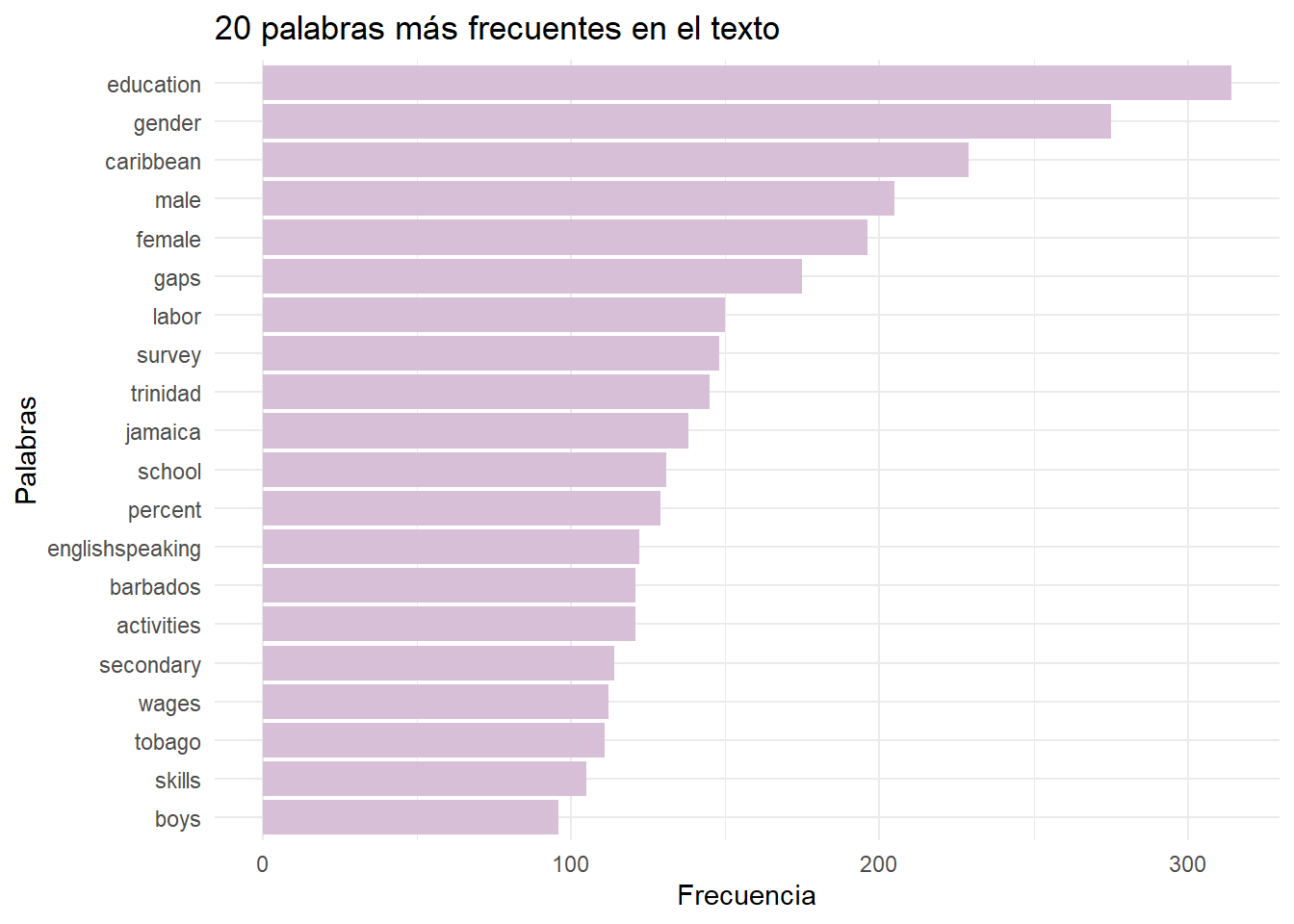
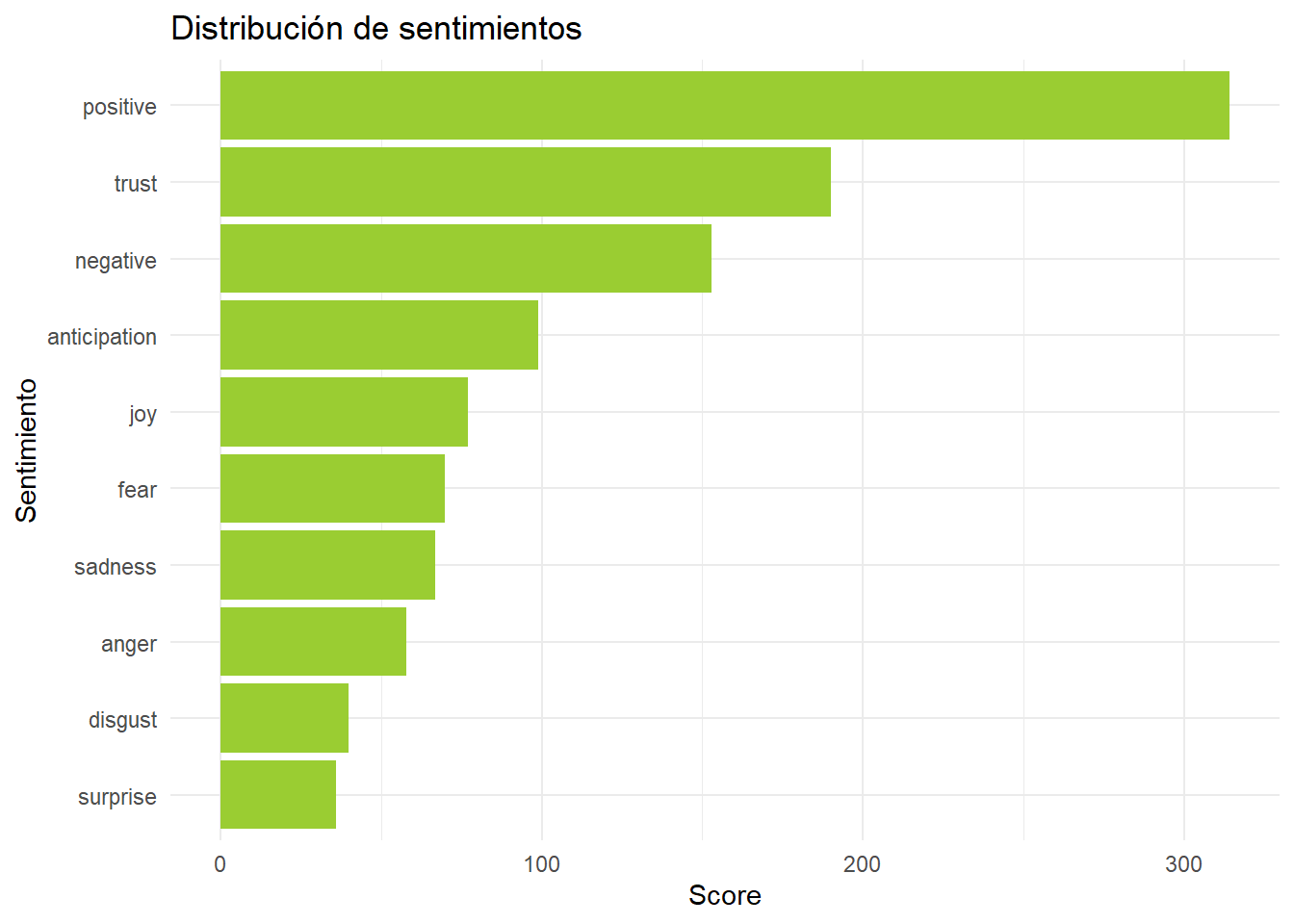
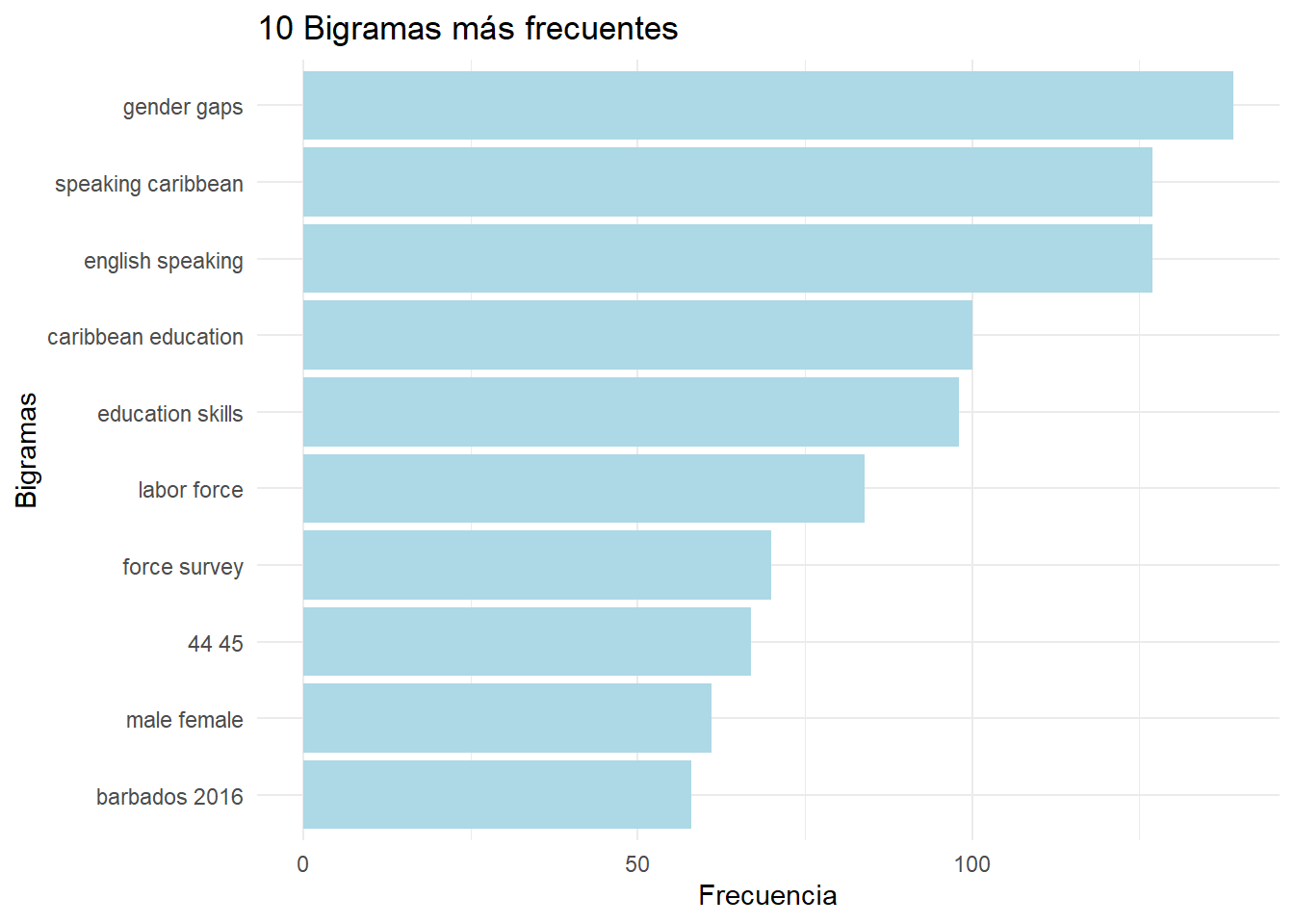
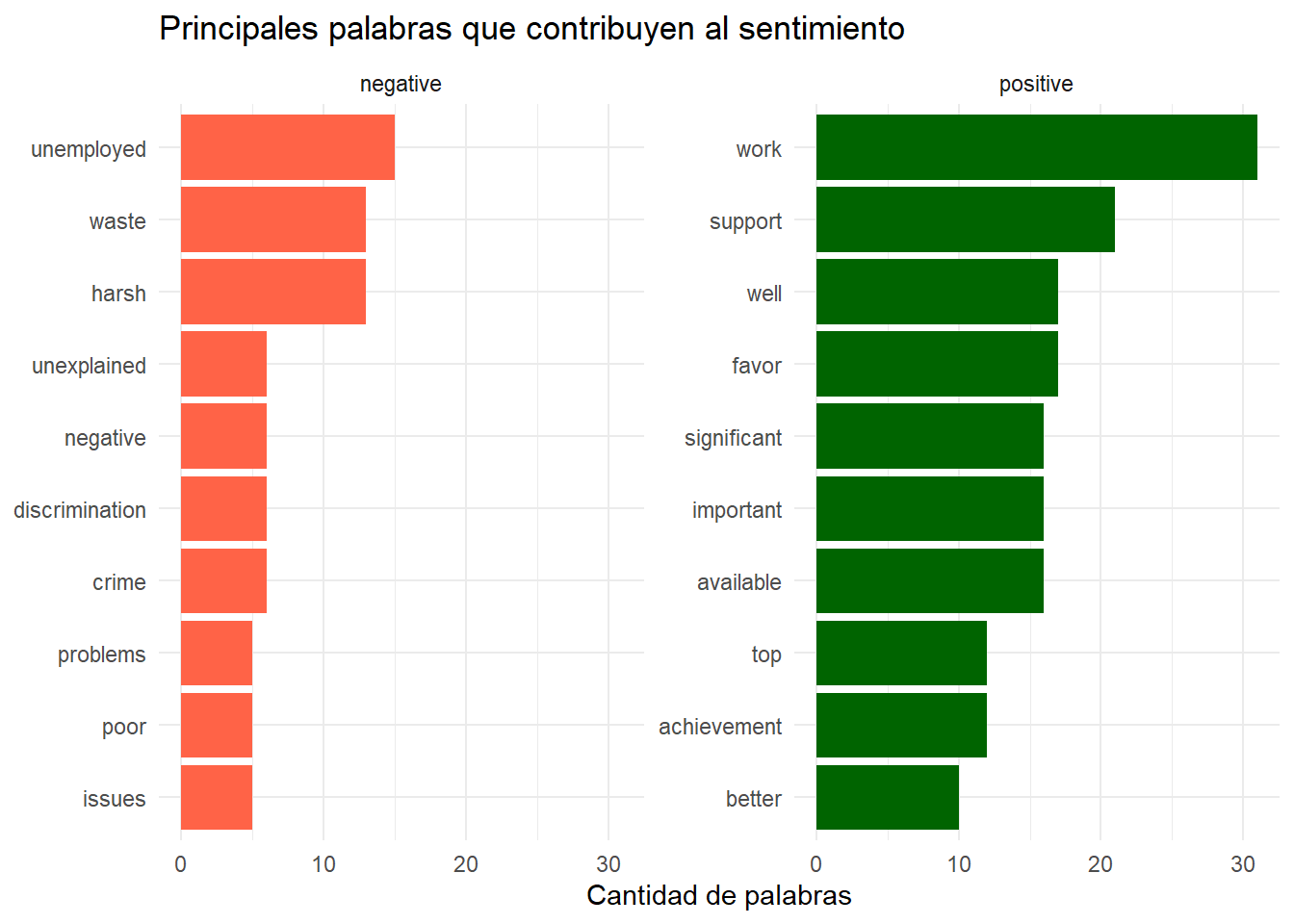
Referencias
Gender gaps in education in the Caribbean: are girls doing better than boys?
Reutilización
Cómo citar
BibTeX
@online{robano2024,
  author = {Robano, Virginia},
  title = {Resumen del artículo Gender Gaps in education in the
    Caribbean: are girls doing better than boys?},
  date = {2024-04-17},
  url = {https://ceibal-fichas-genero-stem.netlify.app/posts/iadb gender gap 2024/},
  langid = {es}
}
Por favor, cita este trabajo como:
Robano, Virginia. 2024. “Resumen del artículo Gender Gaps in
education in the Caribbean: are girls doing better than boys?”
April 17, 2024. https://ceibal-fichas-genero-stem.netlify.app/posts/iadb
gender gap 2024/.